
Building Property Equity: Why Equity Is Wealth, Not Cash
When the same property that builds wealth can also become a financial trap.

By Junah Mpofu
More than 33 years in banking, including mortgage and credit lending, and a real estate portfolio of her own
Read to the end to earn a 20 gold points reward.
What is the Gold Points Reward (GPR)?
GPR is our points reward system. As the Junahyeng Academy platform grows, it lets you earn points and rewards: the more points you earn, the higher the rewards you will unlock in due course.
You earn points for reading and engaging with our guides and articles. Soon you will also earn them for referring friends to the platform, engaging with our socials, and more.
Create a free account to keep the points you earn.
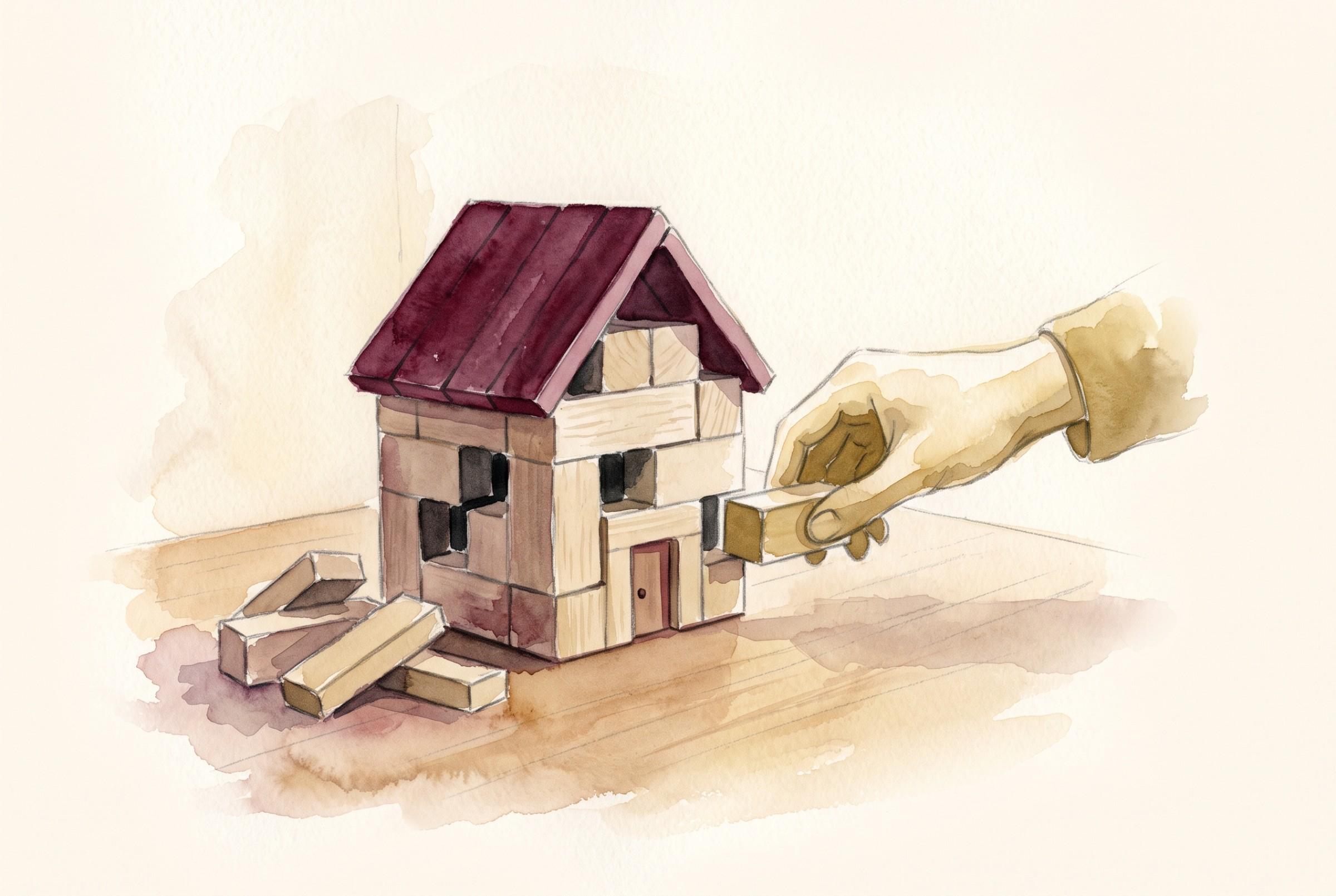
Real estate has long been associated with wealth creation.
Buy a property.
Pay down the mortgage.
Build equity.
Allow the property to appreciate.
Then, where appropriate, use that equity strategically to create additional wealth.
This can be a powerful financial model.
But there is another side to the story.
The same equity that can become a foundation for wealth can also become a temptation to borrow repeatedly. When equity is continually extracted to finance consumption rather than build productive assets, a property can gradually become heavily encumbered.
The homeowner may still say:
“I own my house.”
But the more important question becomes:
“How much of it do I actually own?”
Equity Is Wealth—but It Is Not Cash
Suppose a property is worth $500,000 and the mortgage balance is $200,000.
Ignoring selling costs and other considerations, the owner has approximately $300,000 in equity.
That equity represents an ownership interest. But it is not the same as having $300,000 sitting in a bank account.
To access it, the owner may need to sell the property or borrow against it. This distinction matters because borrowing against equity changes the balance sheet.
If the homeowner repeatedly extracts $50,000, $75,000, or $100,000, the debt increases. The property may still be worth $500,000, but the owner’s net equity may have fallen significantly.
The Equity Illusion
This is where the equity illusion can develop.
A homeowner sees a property increasing in value and thinks:
“I have built wealth, so I can afford to take some of it out.”
The first withdrawal may appear harmless. Then another need arises.
Perhaps it is a vehicle.
Then renovations.
Then a vacation.
Then helping family.
Then paying off other debts.
Then another major purchase.
Because the property has appreciated, the homeowner may continue to have borrowing capacity. The temptation becomes:
“The house has equity. I can borrow it.”
But borrowing capacity is not the same as wealth. Every withdrawal creates an obligation.
Strategic Leverage vs. Habitual Borrowing
This is where financial wisdom becomes important.
There is nothing inherently wrong with using real-estate leverage. The important question is:
What is the borrowed money being used to accomplish?
Consider two very different approaches.
Strategic leverage
Property equity → responsible borrowing → productive investment → potential income/growth → debt repayment → stronger balance sheet.
For example, a homeowner may carefully borrow a portion of available equity and use it as a down payment on a rental property.
If the rental property is properly evaluated and its rental income is sufficient to cover its mortgage and operating costs, it may potentially generate positive cash flow.
Over time, the rental property may also build additional equity through mortgage principal reduction and, where the market supports it, appreciation.
The potential result is that one existing asset has been used as part of a carefully structured strategy to acquire another productive asset.
This is very different from borrowing equity simply to increase consumption.
Habitual borrowing
Property equity → borrowing → consumption → more borrowing → higher debt → less equity → fewer future options.
The danger begins when equity becomes a substitute for income.
If every new financial desire is answered by:
“I’ll just take it out of the house,”
the homeowner may gradually consume the wealth they were trying to build.
The Strategic Leverage Cycle
A simplified model of responsible property leverage might look like this:
- Existing property equity
- Responsible equity borrowing
- Down payment on a productive rental property
- Rental income
- Mortgage + taxes + insurance + maintenance + vacancy + other expenses
- Potential remaining cash flow
- Debt reduction / reserves / reinvestment
- Potential growth in the overall asset base
The important word is potential.
A rental property does not automatically become a good investment simply because someone calls it an investment. The numbers must work.
Three Tests Before Calling It Smart Leverage
Before using property equity to acquire another property, an investor should consider at least three important tests.
1. The Cash-Flow Test
Does the rental property still make sense after considering realistic expenses?
Do not look only at:
Rent − mortgage payment.
Consider the broader costs, including property taxes, insurance, maintenance, repairs, vacancy, management, and other applicable expenses.
A property that looks profitable before expenses may produce little or no cash flow afterward.
2. The Stress Test
What happens if circumstances do not go according to plan?
What if:
- the property is vacant for several months?
- a major repair is required?
- insurance increases?
- property taxes rise?
- rental income falls?
- financing costs increase?
- the investor experiences a temporary reduction in personal income?
A strategy that works only under perfect conditions may not be a resilient strategy.
3. The Balance-Sheet Test
This may be the most important test of all.
After borrowing against the first property and acquiring the second, is the person’s overall financial position becoming stronger or more fragile?
Someone can own two properties and have less financial security than someone who owns one property with substantial equity and manageable debt.
More assets do not automatically mean more wealth. We must look at the relationship between assets, liabilities, income, cash flow, and risk.
When the Paycheck Stops
This distinction becomes particularly important as retirement approaches.
During working years, a person may feel comfortable carrying substantial debt because employment provides regular income. But retirement changes the equation.
Income may become more fixed.
Borrowing capacity may become more limited.
And the ability to recover from a financial mistake may decrease.
This is where excessive property debt can become particularly painful.
Imagine someone who has spent decades extracting equity from a property. The home may have appreciated substantially, but much of that increase has already been borrowed.
At retirement, the person may discover that there is insufficient equity to comfortably downsize. Even moving to a smaller or less expensive property may be difficult.
The property that was expected to provide security has become heavily encumbered.
Don’t Spend Tomorrow’s Equity Today
This is one of the most important principles in property finance:
Don’t spend tomorrow’s equity today.
Do not assume that future appreciation will always rescue today’s borrowing.
Property values can rise, but they can also stagnate or decline.
Interest rates can change.
Income can change.
Employment can change.
Family circumstances can change.
The future is not guaranteed.
Every time equity is extracted, ask:
“What am I giving up in the future to obtain this money today?”
That single question can change the quality of a financial decision.
Final Thought
Property equity can be one of the most valuable financial resources a homeowner builds. But it should be protected, not casually consumed.
Used carefully, equity may support responsible investment and long-term growth. Used carelessly, it can quietly weaken the very financial security it was supposed to create.
Equity is not cash. Borrowing capacity is not wealth. And the wisest financial decisions are often the ones that preserve the most choices for tomorrow.
Disclaimer
This article is for educational purposes only and does not constitute financial, investment, tax, legal, or mortgage advice. Real-estate and borrowing decisions involve risks, and individual circumstances differ. Readers should consider seeking appropriate professional advice before making significant financial decisions.





Comments0
No comments yet. If something here landed, say so. It helps other readers know what to look at.