
The Ownership Ladder
From earning money to building something you own — and understanding the purpose of each step.

By Junah Mpofu
More than 33 years in banking, including mortgage and credit lending, and a real estate portfolio of her own
Read to the end to earn a 20 gold points reward.
What is the Gold Points Reward (GPR)?
GPR is our points reward system. As the Junahyeng Academy platform grows, it lets you earn points and rewards: the more points you earn, the higher the rewards you will unlock in due course.
You earn points for reading and engaging with our guides and articles. Soon you will also earn them for referring friends to the platform, engaging with our socials, and more.
Create a free account to keep the points you earn.
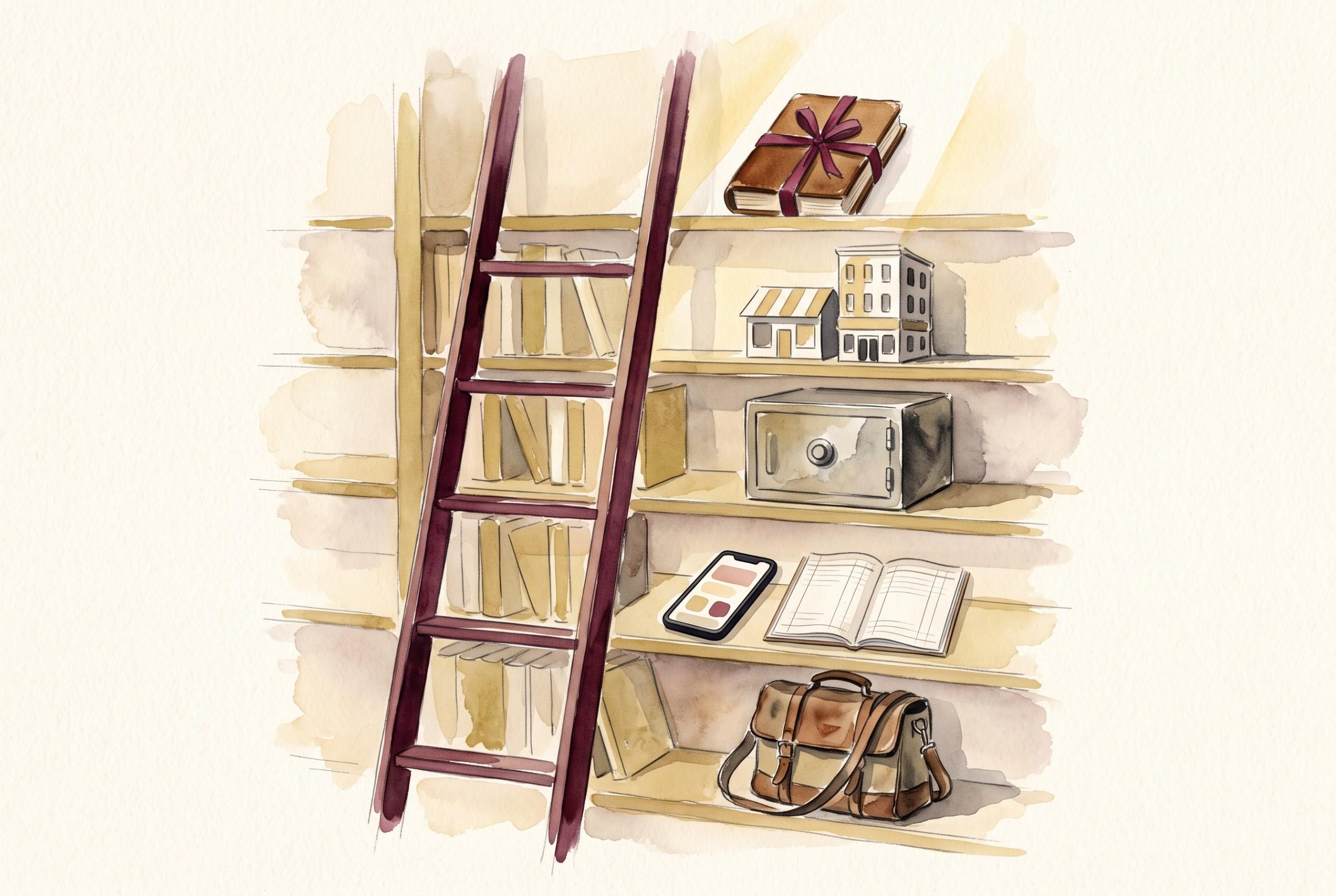
Wealth building rarely happens in one dramatic financial move.
More often, it develops through a series of stages.
We earn. We learn to manage what we earn. We create reserves. We begin investing. Over time, we may accumulate assets, expand what we own and eventually consider what will happen to those assets after us.
Think of this journey as an Ownership Ladder.
The important question is not how quickly you climb.
It is whether you understand the purpose of each step.
Step 1: Earn — Create the Financial Engine
Before money can be saved, invested or used to acquire assets, it generally has to come from somewhere.
For most people, that starting point is income from employment, self-employment, business activity or other sources.
At this stage, an important question is:
How can I strengthen my ability to earn?
Education, experience, professional skills and entrepreneurship can all potentially improve earning capacity.
But earning more is only the beginning.
What happens to the money afterward becomes equally important.
Step 2: Manage — Understand Where the Money Goes
Increasing income does not automatically improve financial security.
If spending consistently grows alongside earnings, very little capital may remain available for future goals.
Managing money means understanding the relationship between:
Income → Expenses → Debt → Available Surplus
This is where budgeting becomes more than simply recording expenses.
It helps reveal whether your financial resources are creating room for the next stage.
Step 3: Save — Build Financial Resilience
Before pursuing growth, many people need some ability to withstand disruption.
Unexpected expenses happen.
Employment can change.
Homes and vehicles require repairs.
Families encounter emergencies.
Savings can create a financial buffer between an unexpected event and the need to borrow immediately.
This stage asks:
If my financial circumstances changed tomorrow, how prepared would I be?
Saving may not always create significant wealth by itself, but it can help protect the foundation upon which wealth may later be built.
Step 4: Invest — Put Some Capital to Work
Eventually, another possibility emerges.
Instead of all available money remaining connected to consumption or cash reserves, some capital may be directed toward productive assets.
This could include different forms of investment depending on an individual's circumstances, knowledge, objectives and tolerance for risk.
The question changes to:
Is some of my money beginning to work alongside me?
Investment introduces growth potential.
It also introduces risk.
Understanding both is essential.
Step 5: Own — Build Economic Value
This is where the idea of ownership becomes especially important.
You may own interests in businesses, property, investments, intellectual property or other productive assets.
But ownership should not simply be measured by the number of assets accumulated.
Ask instead:
What economic value do I actually own?
An asset with substantial debt, high expenses or poor performance may tell a very different story from its headline value.
Quality matters alongside quantity.
Step 6: Expand — Avoid Depending on One Asset
As ownership grows, concentration becomes another consideration.
If most of someone's wealth depends upon one company, one property, one industry or one source of income, a problem affecting that single asset could have significant consequences.
Expansion therefore is not simply about acquiring more.
It can involve understanding diversification, strengthening existing assets and building a more resilient financial structure.
The question becomes:
Is what I own becoming stronger and more sustainable?
Step 7: Transfer — Think Beyond Yourself
Eventually, ownership raises a different kind of question.
What happens to what I have built when I am no longer managing it?
Transfer can involve more than passing money or property to another generation.
It may also include transferring knowledge, financial understanding, business experience and responsibility.
Assets can be inherited.
But the wisdom required to preserve them may need to be taught.
That is why wealth transfer should involve conversations about both assets and understanding.
You Do Not Abandon the Lower Steps
There is something important about this ladder:
Reaching a higher step does not mean the earlier ones disappear.
Someone who owns substantial assets still needs income management.
An investor still needs liquidity.
A business owner still needs risk management.
A person preparing to transfer wealth still needs to understand what is owned and how it is structured.
The ladder therefore does not represent seven financial stages that we finish and forget.
They remain connected.
Junahyeng Reflection
Ask yourself:
Where am I currently strongest on the Ownership Ladder?
Then ask a second question:
Which step needs more attention?
Your answer might be earning.
It might be managing debt.
It might be strengthening savings.
It might be learning before investing.
Or perhaps you already own significant assets and need to think more seriously about diversification or transfer.
There is no need to compare your position with someone else's.
The purpose of the ladder is simply to help you see where you are and what questions deserve your attention next.
Explore the Full Pillar Article
The Ownership Ladder is one part of a broader discussion about moving from earning income toward building ownership.
For the complete explanation, read the Junahyeng Academy Pillar Article:
Final Thought
Wealth building is not simply:
Earn → Invest → Become Wealthy.
There are important foundations between those points.
A more thoughtful journey may look like:
Earn → Manage → Save → Invest → Own → Expand → Transfer
Each stage prepares us to understand the next one.
And perhaps the most useful question is not:
“How far up the ladder am I?”
but:
“Do I understand the step I am standing on?”
Earn with purpose. Build with knowledge. Own with understanding.
Junahyeng Academy — Grow Your Money. Own Your Future.
Educational Disclaimer
This Guide is provided by Junahyeng Academy for general educational and informational purposes only. It does not constitute financial, investment, tax, legal, accounting or business advice. Investments, business ownership and real estate involve risk, including possible loss of capital. Individual circumstances differ. Readers should conduct their own research and, where appropriate, consult qualified professionals before making financial, investment or business decisions.



Comments0
No comments yet. If something here landed, say so. It helps other readers know what to look at.