
From Earning Money to Building Ownership
The shift from working for income to owning what produces value.

By Junah Mpofu
More than 33 years in banking, including mortgage and credit lending, and a real estate portfolio of her own
Read to the end to earn a 20 gold points reward.
What is the Gold Points Reward (GPR)?
GPR is our points reward system. As the Junahyeng Academy platform grows, it lets you earn points and rewards: the more points you earn, the higher the rewards you will unlock in due course.
You earn points for reading and engaging with our guides and articles. Soon you will also earn them for referring friends to the platform, engaging with our socials, and more.
Create a free account to keep the points you earn.

Income can fund your life. Ownership can help shape your future.
Most financial journeys begin with earning: acquiring skills, finding work, building a career, starting a side business, and increasing income. Earning matters enormously; it pays for housing, food, transportation, healthcare, education, savings, and opportunity. Yet a deeper question eventually emerges: Am I only earning money, or am I gradually building ownership?
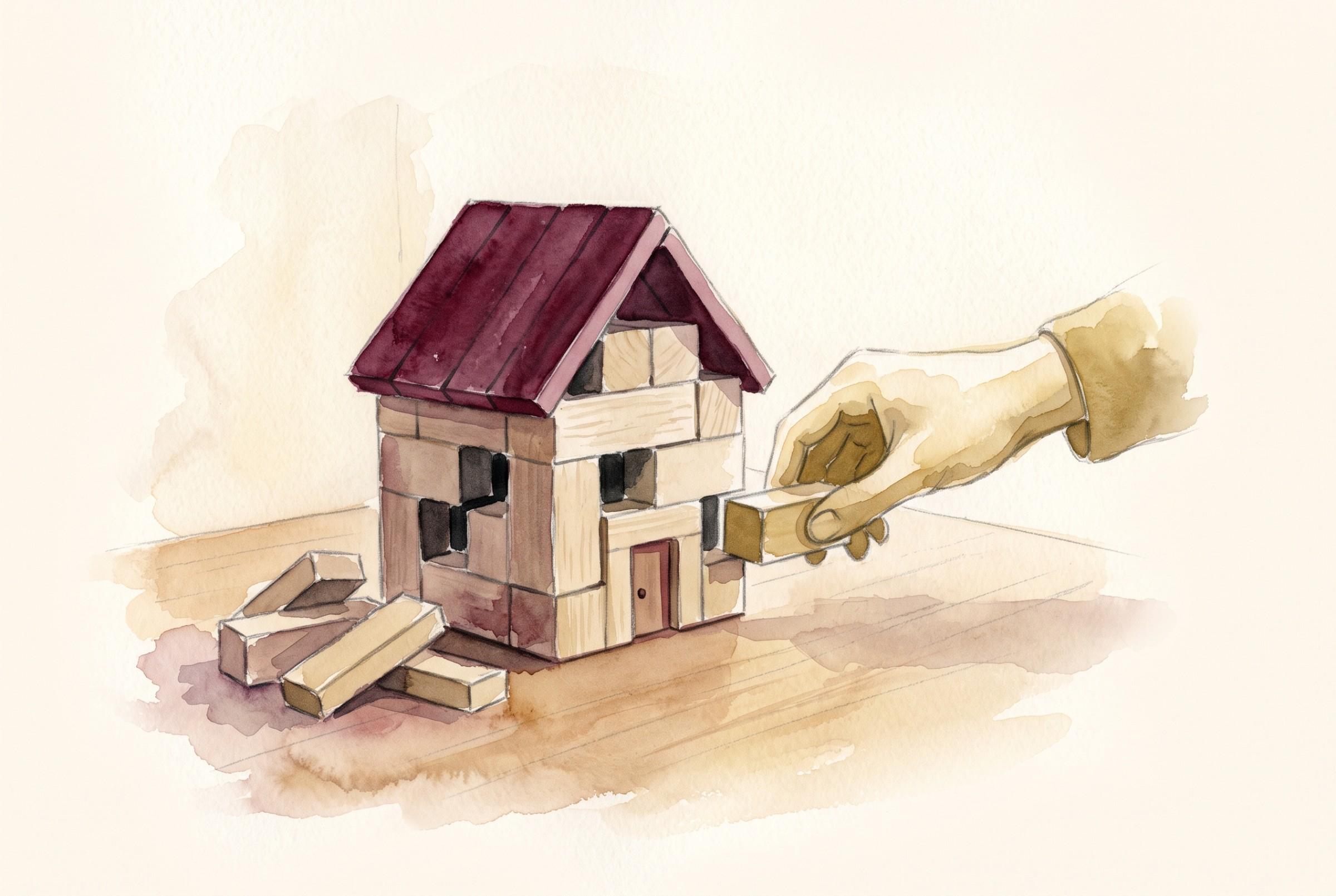
Earnings reward the work you perform today. Ownership gives you an economic interest in something that may continue to create value beyond your immediate labor. Learning how to convert a portion of earned income into resilient, productive ownership is therefore a central part of long-term financial education.
What this article will help you do: distinguish income from ownership, understand equity and risk, evaluate potential assets, and create a practical plan for building ownership at a pace suited to your circumstances.
1. Earning Is the Foundation, Not the Finish Line
For many households, employment income is the financial engine. Your ability to earn—and to protect that ability through relevant skills, health, insurance, and professional development—deserves serious attention.
Earned income, however, is usually tied to continued work. You provide time, knowledge, experience, or labor and receive compensation in return. If the work stops, the income may also stop.
Ownership works differently. When you own an income-producing or appreciating asset, your financial position is no longer based entirely on what you earn each month. You begin building something that has the potential to work alongside your labor.
2. What Ownership Actually Means
Ownership means having an economic interest in an asset. That asset may be a business, shares in companies, real estate, intellectual property, a partnership interest, productive land, an income-producing investment, or a digital enterprise.
Ownership does not automatically create wealth. An asset can rise or fall in value; a business can succeed or fail; and property can generate positive or negative cash flow. The distinction is that an owner has a claim on an asset’s value and potential future economic benefits—fundamentally different from receiving wages for work already performed.
Assets, liabilities, and productive ownership
Not everything you own strengthens your finances. Some assets primarily provide utility, some produce income, some may appreciate, and others require ongoing spending. The useful question is not simply, “Do I own it?” but “What does it contribute after costs, debt, taxes, and risk?”
3. The Financial Transition
Consider two people who each earn $80,000 a year. One consumes almost everything earned. The other steadily directs part of that income toward emergency reserves, debt reduction, and productive assets. After many years, they may have earned similar amounts but own very different levels of wealth.
Income shows how much money is coming in. Ownership helps show what is being built with it.
High earnings can accelerate wealth creation, but earnings alone do not guarantee it. The outcome also depends on what happens after the money is earned: how much is retained, what is acquired, what costs are accepted, and how risk is managed.
4. The Ownership Ladder
The transition usually develops in stages. Ownership does not replace the earlier stages; it is built upon them.
| Stage | Financial focus | Key question |
|---|---|---|
| Earn | Generate income | How do I increase and protect my earning capacity? |
| Manage | Control spending and debt | Where is my money going? |
| Save | Build reserves | Can I withstand a financial disruption? |
| Invest | Acquire productive assets | Is some of my money beginning to work for me? |
| Own | Build equity | What do I own that has lasting economic value? |
| Expand | Diversify productive assets | How can ownership become more resilient and sustainable? |
| Transfer | Preserve knowledge and assets | How can value continue beyond me? |
Someone who earns well but manages money poorly may struggle to accumulate capital. Someone who saves consistently but never considers productive assets may preserve money without achieving meaningful long-term growth. The stages work together.
5. Ownership Changes the Question
When we depend primarily on earnings, we ask, “How much can I earn?” Ownership introduces another question: “What can I build or acquire that may create value over time?”
Additional income from overtime, consulting, or a side business can legitimately improve quality of life, repay expensive debt, strengthen emergency savings, or fund an asset purchase. Financial education should not dictate a single choice. It should clarify the trade-offs so that each person can decide according to their obligations, goals, time horizon, and tolerance for risk.
Build a stable base first
Ownership is more durable when it rests on sound fundamentals: manageable high-interest debt, adequate emergency reserves, appropriate insurance, a realistic budget, and capital that will not be needed for near-term essentials. Investing money required for rent, food, taxes, or emergencies can turn a long-term opportunity into a short-term crisis.
6. Business Ownership
One route toward ownership is business. A founder may initially create another job: they work, invoice, and get paid. If the enterprise develops repeatable systems, loyal customers, capable employees, documented processes, intellectual property, contracts, reliable records, and a recognizable brand, it may begin to acquire value independent of the founder’s daily labor.
A business that cannot operate without its founder may produce good income but have limited transferable value. A business with sustainable earnings, diversified customers, sound governance, and processes that others can operate may become a more resilient asset.
Prospective owners should also understand legal structure, cash flow, customer concentration, working-capital needs, taxes, regulatory obligations, and succession risk. Revenue alone does not reveal the quality of a business.
7. Property Ownership
Real estate offers another useful illustration. A homeowner may build equity as debt is repaid and property values change. An investment property may also generate rental income. Neither outcome is automatic.
Property ownership can involve mortgage payments, property taxes, insurance, maintenance, vacancies, repairs, utilities, management fees, financing costs, legal obligations, and transaction expenses. Local market conditions and interest rates can materially affect results.
The important question is not simply, “Do I own property?” It is, “What is the economic quality of the property I own?” Evaluate cash flow after all costs, financing structure, tenant and location risk, liquidity, expected holding period, and the property’s role in your broader plan.
8. Financial Investments Are Ownership Too
Ownership does not always require starting a company or purchasing an entire building. Buying shares of a publicly traded company, for example, provides a small ownership interest in that business. Pooled funds may provide interests in many companies or other assets at once.
This can make ownership accessible at different financial levels. The initial amount may be small, but the mindset is significant: instead of thinking only, “How can I work for companies?” a person also learns to ask, “How can I own interests in productive enterprises?”
Accessibility does not remove risk. Fees, volatility, concentration, inflation, and the possibility of loss should be understood. Diversification can reduce dependence on a single asset, company, property, industry, or income source, although it cannot eliminate risk.
9. Equity, Net Worth, and Leverage
Equity is the portion of an asset’s value that remains after associated liabilities are deducted. If an asset is worth $400,000 and the outstanding debt attached to it is $250,000, the owner’s equity is $150,000.
Assets − liabilities = net worth.
Building ownership therefore involves more than accumulating assets; it also requires understanding the debt attached to them. Borrowing can magnify gains, but it can also magnify losses, reduce cash flow, and force a sale at an unfavorable time. Always examine interest rates, repayment terms, collateral, and the consequences of declining income or value.
10. How Ownership Can Create Value
A productive asset may create value in several ways: a business may generate profit and become more valuable; a property may produce rent and appreciate; financial investments may provide dividends, interest, or capital growth; and intellectual property may generate royalties or licensing income.
The key word is may. None of these outcomes is guaranteed. Returns should be considered after expenses, taxes, inflation, financing costs, and the value of the time required to manage the asset. A promising headline return can become modest—or negative—after those factors are included.
Ownership also means responsibility
Owners carry risk. A business owner may lose invested capital, a landlord may face vacancies or major repairs, and an investor may experience market declines. Responsible ownership requires knowledge, capital, risk management, patience, discipline, reliable records, and periodic review.
11. A Practical Guide to Evaluating an Ownership Opportunity
Before acquiring an asset, conduct due diligence and answer these questions in writing:
- Purpose: Should this asset provide income, growth, stability, utility, diversification, or some combination?
- Economics: What revenue or income might it produce? What recurring expenses, taxes, fees, and debt obligations apply?
- Risk: How could I lose money or face additional obligations? How much loss can I absorb without compromising essential goals?
- Control: What decisions can I influence, and which depend on managers, tenants, partners, markets, or regulators?
- Liquidity: How quickly and at what cost could I sell or exit if my circumstances changed?
- Time horizon: How long may the asset need to serve its purpose, and can I remain patient through uncertainty?
- Evidence: What records, assumptions, valuations, contracts, and independent information support the opportunity?
- Fit: Would this purchase make my finances more resilient—or leave me overconcentrated, overleveraged, or short of cash?
These questions do not eliminate risk. They replace enthusiasm alone with a disciplined review of purpose, cost, uncertainty, and fit. Where appropriate, consult qualified legal, tax, accounting, insurance, or investment professionals before committing capital.
12. Moving from Consumer to Owner
Every economy needs consumers, and consumption supports daily life. Wealth building adds another perspective: when money enters your household, how much will leave through consumption, and how much will help you acquire something you continue to own?
This does not require eliminating enjoyment. It requires balance. Consumption supports today’s lifestyle; ownership may help finance tomorrow’s choices.
The ownership mindset
Ask regularly:
- What assets do I own, and what purpose does each serve?
- Which produce income, may appreciate, or provide essential utility?
- What do they cost to own?
- How much debt is attached to them?
- Am I overly dependent on one asset, market, customer, or source of income?
- Could these assets eventually create value with less dependence on my labor?
Reviewing these answers at least annually—or after a major life, income, tax, or market change—can keep ownership aligned with your goals.
13. Junahyeng Reader Action Plan
Create a personal ownership snapshot. Use current figures where possible, and note any values that are estimates.
| What I earn from | What I own | What it produces | Costs, debt, and key risks |
|---|---|---|---|
| Salary | Retirement investments | Potential income and growth | Fees and market risk |
| Side business | Business equity | Profit and potential value | Operating and concentration risk |
| Consulting | Property | Rental income, utility, or equity | Debt, maintenance, vacancy, and market risk |
| Other income | Other assets | Income, growth, or utility | Asset-specific costs and risks |
Then complete three steps:
- Measure: Estimate total assets, total liabilities, net worth, monthly cash flow, and readily available reserves.
- Prioritize: Choose one realistic action, such as reducing costly debt, strengthening reserves, learning about an asset class, or beginning a diversified contribution plan.
- Review: Set a date to revisit the snapshot and record what changed.
Finally, ask: If I continue on my current path for the next 10 years, will most of my financial progress come from what I earn—or from what I own?
Closing Perspective: Let Your Work Build More Than Income
There is dignity and value in earning money. Work creates income, skill, experience, and opportunity. But earning becomes more powerful when it also builds a foundation you can keep.
The shift begins when “How much can I earn?” is joined by a second question: “What can I gradually own that creates lasting value?” Over time, that question can lead to greater resilience, more choices, and a financial life that depends less exclusively on the next paycheck.
Earn with purpose. Build with knowledge. Own with understanding.
Educational Disclaimer
This article is provided by Junahyeng Academy for general educational and informational purposes only. It does not constitute financial, investment, tax, legal, accounting, or business advice, and it does not recommend any specific product, strategy, or transaction. Investments, business ownership, and real estate involve risk, including possible loss of capital. Past performance and potential appreciation do not guarantee future results. Individual circumstances differ. Readers should conduct independent research and, where appropriate, consult qualified professionals before making financial, investment, tax, legal, or business decisions.




Comments0
No comments yet. If something here landed, say so. It helps other readers know what to look at.