
What Does Ownership Really Mean?
Moving beyond earning to understanding what you own.

By Junah Mpofu
More than 33 years in banking, including mortgage and credit lending, and a real estate portfolio of her own
Read to the end to earn a 20 gold points reward.
What is the Gold Points Reward (GPR)?
GPR is our points reward system. As the Junahyeng Academy platform grows, it lets you earn points and rewards: the more points you earn, the higher the rewards you will unlock in due course.
You earn points for reading and engaging with our guides and articles. Soon you will also earn them for referring friends to the platform, engaging with our socials, and more.
Create a free account to keep the points you earn.

Learning Objectives
- Explain the difference between earning income and owning an asset.
- Identify common forms of ownership and the ways they may create or retain economic value.
- Evaluate an asset by considering what it produces, what it costs, the risks it carries, and any liabilities attached to it.
- Recognize that ownership can begin on a small scale and does not automatically create wealth.
- Reflect on how current earnings may support both present needs and longer-term ownership goals.
Earning income helps us meet today’s needs. Ownership can help us build value for tomorrow.
Most of us understand earning: we exchange our time, skills, knowledge, or effort for income. That income enables us to support our families, save, and enjoy life. Yet building wealth introduces a second concept—ownership.
The difference between earning and owning may seem small, but each represents a distinct relationship with money. Earning compensates you for what you do. Ownership gives you an economic interest in something that may hold or create value beyond your immediate labor.
Earning Pays You for What You Do
When you work for a salary, wage, or professional fee, you are typically compensated for work you have completed:
- You worked the hours.
- You provided the service.
- You completed the assignment.
- You received the income.
That income is essential. For most people, earning is where the financial journey begins. However, income tied directly to labor may depend on your continued ability and willingness to work.
Ownership introduces a different kind of financial relationship.
Ownership Gives You an Economic Interest
To own something financially means that you have an economic interest in an asset. Examples may include:
- Shares in a company
- A business
- Real estate
- Productive land
- Intellectual property
- A partnership interest
- Certain investments
- A digital enterprise
Instead of receiving money only because you performed work, you have an interest in something that may possess value of its own. That asset may produce income, increase in value, or do both.
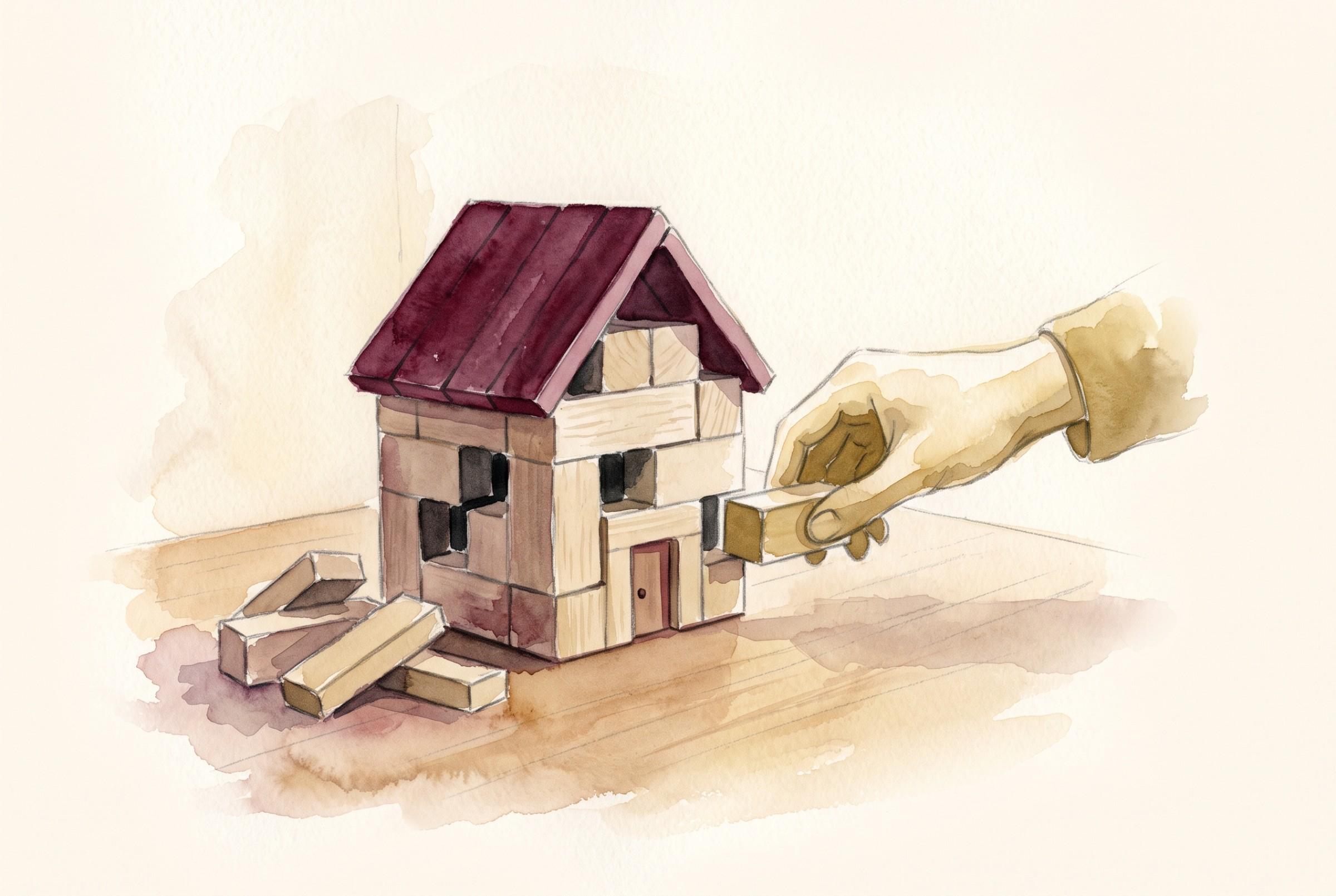
However, ownership alone does not automatically create wealth.
Not Everything You Own Makes You Wealthier
Ownership should be understood, not romanticized.
A property may increase in value, but it may also carry substantial debt and ongoing expenses. A business may generate profits, but it can also lose money. Sometimes, shares may appreciate over time, but their market value can fall.
To understand an asset’s contribution to your financial position, consider four questions:
- What does it produce?
- What does it cost?
- What risks does it carry?
- What liabilities are attached to it?
The more useful question is not simply, “What do I own?” It is, “What is the economic value and purpose of what I own?”
That question brings us closer to understanding how ownership may—or may not—support long-term wealth.
Ownership Can Begin Small
The word ownership may bring to mind large businesses, apartment buildings, or substantial investment portfolios. Yet ownership does not have to begin on a large scale.
Purchasing a modest number of shares in a company creates an ownership interest. Building a small enterprise with customers, systems, and a recognizable brand may gradually create a business asset. Developing intellectual property may create something capable of producing future economic value.
The starting amount may be small. The important shift is learning to distinguish between money earned and value owned.
A Question Worth Asking
The next time income enters your household, ask:
How much of what I earn is supporting my life today, and how much is helping me build something I may still own tomorrow?
There is no universal percentage and no single correct answer. People have different incomes, responsibilities, debts, families, and financial priorities.
The purpose of the question is not to suggest that every dollar should be invested. It is to help you become more conscious of what your earnings are gradually building.
Junahyeng Reflection
Take a few minutes to identify the assets you currently own. For each one, ask:
- Does this asset produce income?
- Could it increase or decrease in value?
- What does it cost to maintain?
- Is debt attached to it?
- What role does it play in my long-term financial position?
The most valuable result of this exercise may not be the value of the assets themselves. It may be the habit of seeing your finances through the eyes of an owner.
Explore the Full Pillar Article
This guide introduces one part of a broader financial journey.
To explore how earning, managing money, saving, investing, ownership, expansion, and wealth transfer can connect, read the Junahyeng Academy Pillar Article:
Final Thought
Earning asks, “What am I being paid for?”
Ownership asks, “What am I gradually building?”
Both matter. Earning can fund the present; informed ownership can help shape the future. The financial journey begins to change when you understand how the two work together—and make deliberate choices about what your income is building.
Earn with purpose. Build with knowledge. Own with understanding.
Junahyeng Academy — Grow Your Money. Own Your Future.
Educational Disclaimer
This guide is provided by Junahyeng Academy for general educational and informational purposes only. It does not constitute financial, investment, tax, legal, accounting, or business advice. Investments, business ownership, and real estate involve risk, including the possible loss of capital. Individual circumstances differ. Readers should conduct their own research and, where appropriate, consult qualified professionals before making financial, investment, or business decisions.



Comments0
No comments yet. If something here landed, say so. It helps other readers know what to look at.