
Dear Junah · Scenario
I've sent money home for five years to build a house. How do I know it's real?
Voices in the video are AI-generated.
Read what the video says
Dear Junah,
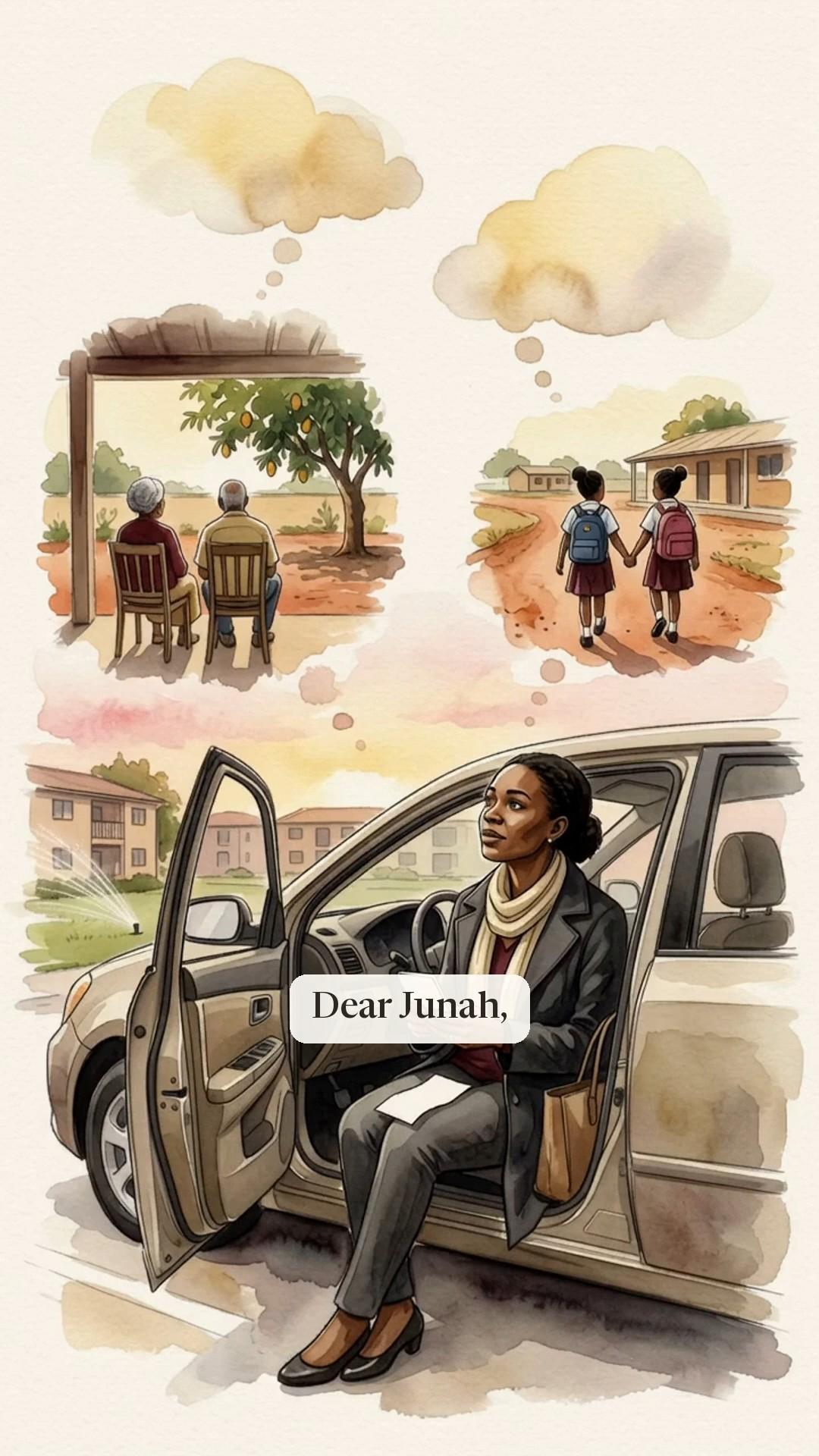
For five years I've sent money home to build a house. My cousin says it's nearly done, but the photos stopped and he keeps asking for more. What should I do?
Doubtful in the Bronx
My dear, love does not replace receipts. Pause new money until someone independent visits the site. Then pay in stages for progress you can see, with the land papers in your name.
Warm wishes, Junah
The short answer
Pause new money until someone independent, with no part in the building, visits the site and shows you what is really there. Check that the land is registered in your name, using a lawyer you choose yourself. From then on, pay in stages for progress you can see, pay builders and suppliers directly where you can, and keep every receipt.

By Junah Mpofu
More than 33 years in banking, including mortgage and credit lending, and a real estate portfolio of her own
Last reviewed
The question
Dear Junah,
For five years I've sent money home to build a house. My cousin says it's nearly done, but the photos stopped and he keeps asking for more. What should I do?
Doubtful in the Bronx
An illustrative letter.
The answer
My dear, five years of sending money for a home is five years of hope and hard work, and it hurts to begin doubting it. Doubting family hurts even more. But asking to see what your money has built is not an accusation. It is what any careful owner does, and an honest builder, or an honest cousin, has nothing to fear from it.
What are the warning signs?
Some are already in your letter. Updates that stop. Requests for more money that grow while the news grows vague. Others to watch for: no receipts, reasons why nobody else can visit, sudden urgent costs that must be paid this week, and answers that change from one call to the next.
One sign alone may have an innocent reason. Building is slow everywhere, and prices rise. But several together mean it is time to look closely before another dollar goes.
Why pause new money now?
Because right now you do not know where things stand, and money sent without knowing is money at risk. A pause is not a punishment. Tell your cousin kindly that before you send more, you want to see the progress properly. Building work can wait a few weeks. If the house is nearly done, as he says, a short pause costs little and the visit will show it.
Who can check the site for me?
Someone independent: a person with no part in the building and nothing to gain from it. That might be a friend you trust, a relative outside this arrangement, or a professional such as a surveyor or engineer you hire yourself. Ask them to walk through the whole house on a live video call, room by room, and to send dated photographs of the roof, the walls, the windows, the plumbing and the wiring.
If you have drawings or a plan for the house, share them with whoever visits, so they can compare what they see with what was meant to be built. A builder can also give a rough idea of what the finished work so far would normally cost, which helps you judge the money that has gone in.
If you can travel, go yourself, even for a few days. Nothing replaces standing on your own land and seeing it with your own eyes.
Is the land in my name?
This matters as much as the building. A house on land you do not legally own is not truly yours. Ask for the land documents and have them checked at the land registry in your home country. Use a lawyer you choose yourself, not one suggested by the person handling your money. The lawyer can confirm whose name is on the title, whether there are any disputes or claims on it, and what you need to do to put it right.
Land disputes are a painful and familiar story among people who build from abroad: land sold twice, papers in the wrong name, a claim from a distant relative years later. A few weeks spent on the papers now can protect the rest of your life's savings.
How do I pay from now on?
Once you know where things stand, agree a written plan for what is left to build, with a cost for each stage: walls, roof, windows and doors, plumbing, wiring, finishing. Then pay one stage at a time, and only after someone independent confirms the last stage is done.
Where you can, pay the builder and the suppliers directly, rather than sending everything through one person. Ask for receipts for every payment and keep them all in one folder, with a running total. It is more work, but it is how you turn hope into a house.
Add up, too, everything you have sent over the five years, from your transfer receipts. Knowing the total helps you judge what you see on the site, and what a fair cost to finish should be.
What if the money has been misused?
It is painful to consider, but better faced than avoided. Find out first what is really there and what is really owed. Then you have choices: finish the house under a new arrangement with someone else overseeing it, sell the land, or, if large sums are missing, speak with a lawyer about what can be recovered. Whatever you decide, do not keep sending money into the same arrangement in the hope it will right itself.
How do I talk to my cousin?
Calmly, and without accusing him. You might say that after five years you want to see what you have built together, and that from now on you will pay in stages as the work is checked, the way builders are paid everywhere. If he has done the work honestly, this protects him too, because the receipts and photographs will show it.
Love and trust are precious, but they were never meant to replace receipts. Put the two together, and your house can become what you worked for: a home, built on solid ground, in your own name.
Before you send another dollar
The total you have sent
Five years of transfer receipts, added up.
A pause, explained kindly
No new money until the site has been seen.
An independent visit
Someone with no part in the build, on a live video call, room by room.
The land papers checked
At the land registry, by a lawyer you choose yourself.
A written plan for what is left
Each remaining stage of the work, with its cost.
Payment by stages
Each stage paid only after the last one is confirmed.
Builders and suppliers paid directly
Where you can, with a receipt for every payment.
One folder for everything
Receipts, photographs, the plan and a running total.
Questions people ask
How do I know money I send for a house back home is being used properly?
Ask someone independent, with no part in the building, to visit the site and show you every room on a live video call, with dated photographs. Ask for receipts for materials and labor. If the answers are vague or visits are discouraged, pause new payments until you can see the progress for yourself. From then on, pay in stages, only after each stage is confirmed.
How can I check land ownership in my home country from abroad?
Hire a lawyer in your home country whom you choose yourself, and ask them to search the land registry. They can confirm whose name is on the title, whether there are disputes or other claims on the land, and what is needed to register it properly in your name. Avoid relying only on documents passed to you by the person handling the building money.
What is the safest way to pay for building a house abroad?
Agree a written plan with a cost for each stage of the work, then pay one stage at a time, only after someone independent confirms the previous stage is complete. Where possible, pay builders and suppliers directly rather than through one intermediary, and keep every receipt in one place with a running total. Make sure the land itself is registered in your name.
What can I do if a relative misused money I sent home?
First, find out what has actually been built and what is owed, through an independent visit and a check of the land papers. Then decide whether to finish the work under new oversight, sell the land, or, for large missing sums, speak with a lawyer in that country about what may be recovered. Stop sending money into the same arrangement while you decide.
Three things to take away
- Asking to see what your money built is not an accusation.
- Pause new money until someone independent has seen the site.
- Put the land in your name, then pay in stages for progress you can see.
One thing to do this week
Ask someone you trust, with no part in the building, to visit the site and walk you through it on a video call.
Keep going
Building Property Equity: Why Equity Is Wealth, Not Cash
When the same property that builds wealth can also become a financial trap.

What Do You Own and What Do You Owe?
Income alone does not show whether you are building wealth. Your assets and liabilities do.

Securing and Preserving Generational Wealth
Nine pillars for protecting wealth, preparing heirs, and leaving a legacy that outlives the wealth creator.
An illustrative scenario for education, not personal financial, tax, legal or investment advice. Your situation will differ. About these scenarios