
Dear Junah · Scenario
Customers buy on credit at my grocery and don't pay. How do I say no?
Voices in the video are AI-generated.
Read what the video says
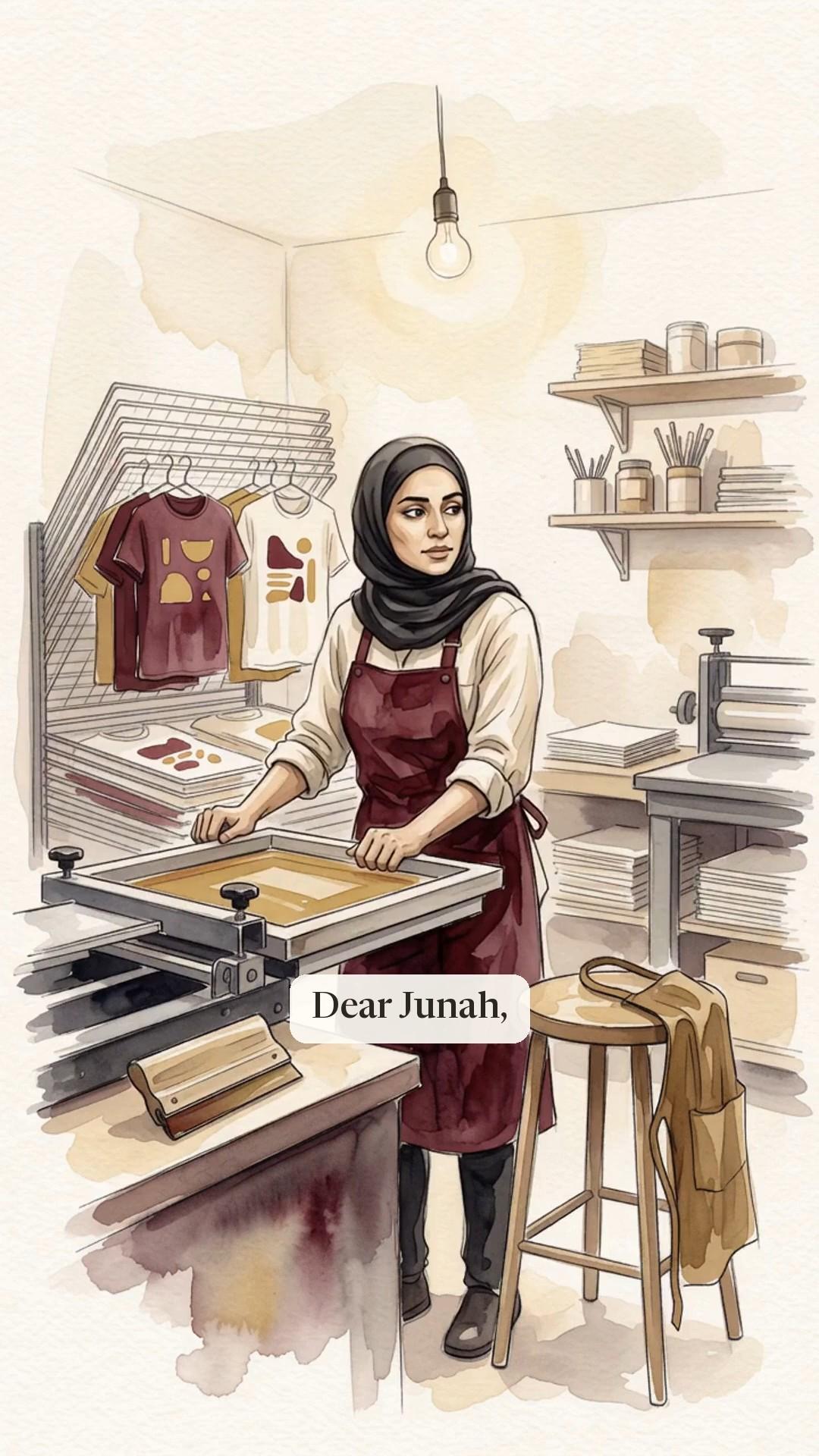
Dear Junah,
I own an African grocery store. People from church and my hometown association buy on credit, and the tabs top $3,000. Saying no feels like insulting family. What do I do?
Too kind in Hyattsville
My dear, kindness needs a ledger. Record every tab, set a small limit, and collect gently by month's end. A posted house rule says no for you, so friendships stay whole.
Warm wishes, Junah
The short answer
Give your kindness a ledger. Write down each tab with its date and amount, give every customer a small limit, and ask for tabs to be settled by the end of each month, with no new credit until they are. Post the rule where everyone can see it, so the store's policy does the refusing. Collect old tabs privately and gently, with payment plans where needed.

By Junah Mpofu
More than 33 years in banking, including mortgage and credit lending, and a real estate portfolio of her own
Last reviewed
The question
Dear Junah,
I own an African grocery store. People from church and my hometown association buy on credit, and the tabs top $3,000. Saying no feels like insulting family. What do I do?
Too kind in Hyattsville
An illustrative letter.
The answer
My dear, your store is more than a shop. It is where people find the taste of home, hear their language and catch up on news from the village. Of course they treat it like family, and of course you want to say yes. I spent years in credit and debt recovery, and I can tell you that most unpaid tabs are not theft. They are kindness without a system. The kindest thing you can do now, for your customers and for your store, is to give that kindness a ledger.
Why do tabs grow so easily?
Because nothing stops them. Without a written record, people honestly forget what they owe. Without a limit, a small tab becomes a large one a few dollars at a time. Without a date, there is never a moment when paying feels urgent. Add the warmth of a community where refusing feels like an insult, and $3,000 builds up before anyone notices.
What do the tabs really cost the store?
More than it seems. You paid your suppliers for that rice, those yams and those spices weeks ago. Grocery profits are thin, so unpaid tabs eat into the store's living. If, for example, you keep 20 cents of profit on each dollar of sales, $3,000 of unpaid tabs wipes out the profit on $15,000 of sales. That is money you need for rent, stock and your own family.
How do I set a fair house rule?
Keep it simple, and write it down. Many small shops that extend credit use a rule like this:
- Credit is for regular customers only, people you know well.
- Each customer has a small limit, perhaps $100, that no tab can pass.
- Tabs are settled by the end of each month.
- No new credit until last month's tab is paid.
Post it near the till, in the languages your customers speak, with a warm line at the top: "We love serving our community. To keep our doors open for everyone, here is how store credit works." Now the rule does the refusing. You are not refusing Auntie. You are following the store's rule, and she can see that it applies to everyone.
How do I keep a proper ledger?
One page or one screen for each customer. Write the date, what they took and the amount, every time, and the running total. Many shopkeepers ask the customer to initial the entry, or send a quick text confirming it, so there is never a disagreement later. When they pay, write that down too. A ledger protects the friendship as much as the money, because no one has to rely on memory.
How do I collect what is already owed?
Start fresh, and start gently. Make a list of every open tab and the amount. Then speak to each person privately, never in front of others, and with respect: "I'm starting a new system for the store, and I wanted to go over your tab with you." Show them the amount, and offer a plan if they need one, such as a little each week. Most people pay when they are asked kindly and given a way.
You may also decide that some very old, small amounts are simply gifts. That is your choice to make. If you forgive a tab, do it on purpose and say so, rather than letting it hang between you for years. A clear gift strengthens a friendship. An unspoken debt weakens it.
How do I say no without insulting family?
Lean on the rule, and lean on warmth. You might say, "You know you are family here. The store has a rule now, and I have to keep it for everyone, or I'll have to close my doors." People in your community understand a business that must survive. And for someone truly in need, a gift of food you choose to give is cleaner and kinder than a tab neither of you expects to be paid.
It also helps to make paying easy. If you can accept cards and payment apps, customers who are short until payday may be able to use their own card instead of your credit.
What about taxes on unpaid tabs?
This depends on how your books are kept. As a general rule, if your store keeps its books on the cash method, counting sales when you are paid, an unpaid tab cannot be deducted as a bad debt, because it was never counted as income. If your books are on the accrual method, a debt you have counted as income and truly cannot collect may be deductible. A CPA can tell you how this applies to your store.
Can kindness and business live together?
Yes, and your store is proof of it. A ledger, a limit and a date do not make you less generous. They make your generosity last, so the store is still there next year, and the year after, for everyone who needs a taste of home.
A house rule for tabs
Write the rule and post it near the till
In the languages your customers speak, with a warm line at the top.
Credit for regular customers only
People you know well and see often.
A small limit for each customer
Perhaps $100, so no tab can grow past what you can afford to wait for.
Tabs settled by the end of each month
And no new credit until last month's tab is paid.
Every tab recorded in a ledger
Date, items and amount, with the customer's initials or a confirming text.
Old tabs discussed privately
Kindly, never in front of others, with a payment plan where needed.
Forgiveness decided on purpose
If you forgive a small old tab, say so clearly, as a gift.
Easy ways to pay
Cards and payment apps let customers use their own credit instead of yours.
A word with your accountant
How unpaid tabs are treated depends on whether your books use the cash or accrual method.
Questions people ask
Should a small store let customers buy on credit?
Many community stores do, and it can build loyalty, but only with a system. A written ledger, a small limit for each customer, a date for settling up each month and a rule of no new credit until old tabs are paid keep credit from turning into losses. Posting the rule where everyone can see it makes it fair and easier to keep.
How do I collect money that customers owe my store?
List every open tab and its amount, then speak to each customer privately and kindly. Explain that the store is starting a new system, show them the amount, and offer a payment plan if needed, such as a small amount each week. Write down every payment. Most people pay when asked respectfully and given a clear way to do it.
How do I say no to store credit without offending customers?
Let a posted house rule do the work. When the rule applies to everyone and is written near the till, saying no is not personal: you are following the store's policy. Keep your tone warm, remind them they are valued, and explain that the rule keeps the store open for the whole community. Making card and app payments easy also gives customers another way to buy.
Can I deduct unpaid customer tabs on my taxes?
It depends on your accounting method. Under IRS rules, a business on the cash method generally cannot deduct an unpaid amount as a bad debt, because it never counted that amount as income. A business on the accrual method that has included the sale in income may be able to deduct a debt that becomes truly uncollectible. A CPA can tell you how this applies to your store.
How do I keep a credit ledger for a small shop?
Keep one page, or one line in a spreadsheet or app, for each customer. Record the date, what was bought and the amount for every purchase on credit, along with the running total, and record every payment the same way. Asking the customer to initial each entry or confirm it by text avoids disagreements later and protects the relationship.
Three things to take away
- Give your kindness a ledger, and write down every tab.
- A rule posted by the till makes saying no less personal.
- Collect old tabs privately and gently, with payment plans.
One thing to do this week
List every open tab and its amount, then write your house rule and post it near the till.
Keep going
From Earning Money to Building Ownership
The shift from working for income to owning what produces value.
Debt Management Builds Future Freedom
How you manage debt determines whether borrowing supports your future or limits it — and why debt management builds future freedom.
Fixing The Leak: The Path to Creating Wealth
Find where the money already goes before you try to earn more.
An illustrative scenario for education, not personal financial, tax, legal or investment advice. Your situation will differ. About these scenarios