
Dear Junah · Scenario
Everything went back into my business. Is selling it my retirement plan?
Voices in the video are AI-generated.
Read what the video says
Dear Junah,
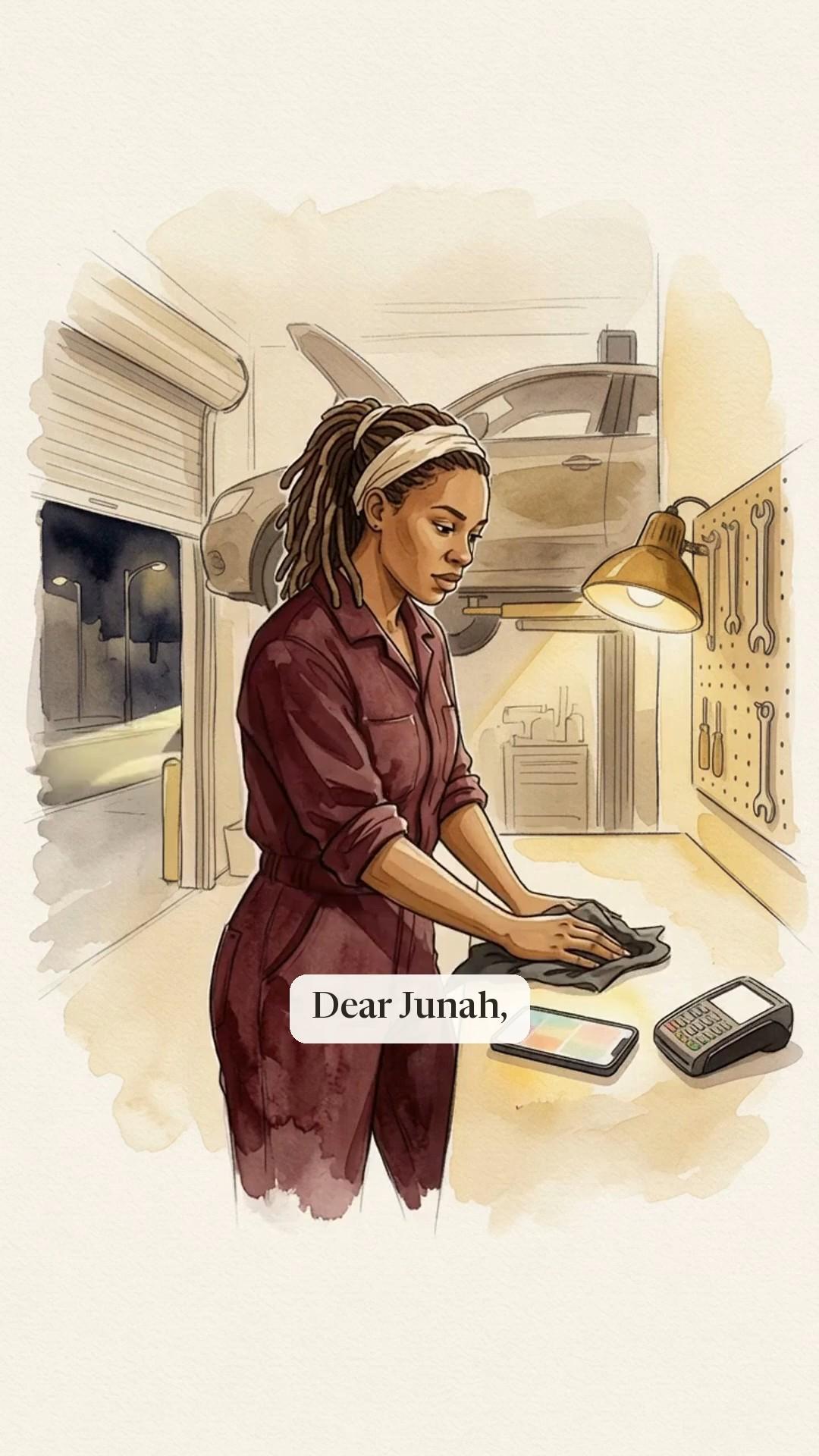
I've run my small trucking company for twenty years. Every dollar went back into trucks. I'm 54 with almost nothing saved for retirement. My plan is to sell the business. Is that enough?
Running late in Fort Worth
My dear, a business is worth what a buyer will pay, often less without you. Some self-employed retirement plans allow extra savings after fifty. Start now, and pay yourself first.
Warm wishes, Junah
The short answer
Selling the business can be part of your retirement, but rarely all of it. Its price is set by a buyer on the day you sell, and businesses that depend on their owner usually fetch less. At 54, retirement plans for business owners allow extra catch-up savings after 50, so many owners start paying themselves first now, while they work to make the business sellable.

By Junah Mpofu
More than 33 years in banking, including mortgage and credit lending, and a real estate portfolio of her own
Last reviewed
The question
Dear Junah,
I've run my small trucking company for twenty years. Every dollar went back into trucks. I'm 54 with almost nothing saved for retirement. My plan is to sell the business. Is that enough?
Running late in Fort Worth
An illustrative letter.
The answer
My dear, twenty years of putting every dollar back into the trucks is twenty years of building something real, and I respect that. When I founded a family real estate agency, I did much the same. But I learned, as many owners do, that a business is only worth what someone else will pay for it on the day you want to leave. You still have time to give yourself a second leg to stand on, and at 54, the law gives you some help to do it.
What will a buyer actually pay for my business?
A buyer pays for the profits they expect to earn after you are gone, plus the value of what they take over, such as trucks, contracts and customers. That leads to a few hard truths.
- If the business depends on you, it is worth less. If the customers call you, the drivers answer to you and the routes live in your head, a buyer is paying for a business that might walk out the door with you.
- Trucks lose value. Equipment that has been driven hard for years may be worth much less than you paid, and a buyer will look closely.
- Profits on paper matter. Many owners keep taxable profit low on purpose. That saves tax today, but a buyer values the business on the profits the books show, so low reported profits can mean a low price.
- Selling takes time. Finding the right buyer, agreeing a price and closing a sale often take many months, and markets for small businesses rise and fall. You may not be able to choose the year.
None of this is a reason not to sell. It means the sale price is a hope, not a plan. A plan has more than one source of money.
How can I catch up on retirement savings at 54?
The tax law lets people aged 50 and over save extra each year, called catch-up contributions, and business owners have several plans to choose from. The 2026 limits are:
- A 401(k). You can defer up to $24,500 of your own pay, plus $8,000 more because you are over 50. The business can add contributions too, within a total limit of $72,000, not counting catch-up.
- A SIMPLE IRA. Easier to run, with lower limits: generally up to $17,000 of your pay, plus $4,000 more after 50. Plans at some smaller employers have slightly different limits.
- A SEP IRA. The business contributes a percentage of pay, up to 25 percent of compensation and $72,000 in total, but there are no catch-up contributions.
- An IRA of your own. Up to $7,500, plus $1,100 after 50.
There is an important catch for a business like yours. If you have employees, as most trucking companies do, these plans generally have to include eligible employees too, with contributions or matches for them as well. A plan only for owners, sometimes called a solo 401(k), is meant for businesses with no employees other than the owner and a spouse. A CPA or plan provider can tell you which fits your company and what it would cost.
What would saving now actually add up to?
Let's do simple arithmetic, before any growth. If you set aside $1,500 a month from age 54 to 67, that is $234,000 of your own money. If you can reach the full $32,500 a year in a 401(k) with catch-up, that is $422,500 over the same thirteen years. Invested sensibly, either could grow further. Either one could stand beside the sale price as a second source of money, so the business does not have to carry the whole weight.
What does it mean to pay myself first?
It means you are an employee of your business too. Set yourself a regular salary, and send a fixed share to retirement savings every month, before the money goes back into the company. Treat that payment like a truck note: it is not optional, and it comes off the top. The business will adapt, as businesses do.
How do I make the business worth more when I sell?
Start now, because these steps take years. Train someone who can run the yard and handle customers without you. Put customer agreements in writing. Keep clean, complete books, so a buyer can trust the profits they see. Keep the fleet maintained, with records. Each of these makes the business less dependent on you, and a business that runs without its owner is worth more to a buyer. An honest valuation from a business appraiser can show where you stand today.
What about Social Security?
Self-employed people pay into Social Security through self-employment tax, and benefits are based on the earnings you reported over your working life. If you paid yourself little or showed low profits for years, your benefit may be smaller than you expect. Your earnings record and estimates are in your account at SSA.gov. Look at it this month, so you know what you are building on.
Is it too late?
No. Thirteen years is a long time to save, especially with catch-up limits on your side. You built a fleet from the ground up. Building a retirement account beside it is a smaller job than the one you have already done.
Turning the business into a retirement
Pay yourself a regular salary
A set amount every month, as if you were your own employee.
Open a retirement plan this year
A 401(k), SIMPLE IRA or SEP IRA. Which fits depends on whether you have employees.
Use catch-up contributions
After 50 in 2026: $8,000 more in a 401(k), $4,000 more in most SIMPLE IRAs, $1,100 more in an IRA.
Send a fixed amount to savings every month
Before the money goes back into the business, like a truck note.
Get an honest valuation
From a business appraiser, so you know what a buyer might pay today.
Make the business run without you
Train a manager, and put customer agreements and routes in writing.
Keep clean, complete books
Buyers value the business on the profits they can see and trust.
Check your Social Security record
Your earnings history and benefit estimates are in your account at SSA.gov.
Plan the sale years ahead
Selling often takes many months, and you may not get to choose the market.
Questions people ask
Can my business be my retirement plan?
It can be part of it, but relying on a sale alone is risky. A business sells for the price a buyer agrees to, which depends on its profits, its equipment and how much it relies on the owner. Markets for small businesses change, and sales take time. Many owners combine a planned sale with retirement savings built up separately, so the business does not have to carry the whole weight.
What retirement plans can a small business owner use?
Common choices are a 401(k), a SIMPLE IRA and a SEP IRA, along with a personal IRA. A 401(k) allows the highest savings, a SIMPLE IRA is easier to run, and a SEP IRA is funded only by the business. If the business has employees, these plans generally must include eligible employees too. A solo 401(k) is for owners with no employees other than a spouse.
How much can I save for retirement in 2026 if I am over 50?
In a 401(k), you can defer up to $24,500 plus an $8,000 catch-up contribution, and those aged 60 to 63 can use a higher catch-up of $11,250. In a SIMPLE IRA, the limit is generally $17,000 plus $4,000 for those over 50, with slightly different limits at some small employers. In an IRA, it is $7,500 plus $1,100. Business contributions to a 401(k) or SEP IRA can raise the total, within a limit of $72,000 before catch-up contributions.
How are small businesses valued when they are sold?
Buyers mostly look at the profits they expect to earn after the sale, along with the value of equipment, contracts and customers. A business that depends heavily on its owner, keeps incomplete records or reports low profits usually sells for less. A professional business appraiser can estimate value, and owners often start preparing years in advance to raise it.
Does keeping my business profits low affect my Social Security?
It can. Self-employed people pay Social Security tax on their net earnings from self-employment, and retirement benefits are based on a lifetime of reported earnings. Years of low reported profit can mean a smaller benefit. Your earnings record and estimates are in your account at SSA.gov, and a CPA can explain how your choices affect both your taxes and your future benefit.
Three things to take away
- The sale price is set by a buyer, on the day you sell.
- After 50, catch-up limits let you save extra every year.
- Pay yourself first, every month, and make the business run without you.
One thing to do this week
Look up your Social Security earnings record at SSA.gov, and ask your CPA which retirement plan fits a business with your number of employees.
Keep going

From Earning Money to Building Ownership
The shift from working for income to owning what produces value.
More Income Is Not the Same as More Wealth
Income measures money coming in. Wealth reflects what you are building and keeping over time.

Discover the Wealth You Already Have
Your retirement wealth may be much broader than the balance shown on a bank or investment statement.
The next question
An illustrative scenario for education, not personal financial, tax, legal or investment advice. Your situation will differ. About these scenarios