
Dear Junah · Scenario
$38,000 on four credit cards. Should we use our home equity to wipe it out?
Voices in the video are AI-generated.
Read what the video says
Dear Junah,
We owe $38,000 on four credit cards. My husband says a home equity line would save us hundreds a month. We keep swearing we're done with the cards. Smart move or risky?
Tempted by equity in Overland Park
My dear, lower interest helps, but your house backs the debt. If the cards fill up again, you owe twice and risk your home. Break the habit first, then move the debt.
Warm wishes, Junah
The short answer
It can cut interest sharply, since home equity lines average about 7.3% against roughly 22% on cards. But it turns unsecured debt into debt backed by your home, its rate usually floats, and stretching it out can cost nearly as much as the cards. It works only if the spending has truly stopped and you keep paying as if you still owed card rates.

By Junah Mpofu
More than 33 years in banking, including mortgage and credit lending, and a real estate portfolio of her own
Last reviewed
The question
Dear Junah,
We owe $38,000 on four credit cards. My husband says a home equity line would save us hundreds a month. We keep swearing we're done with the cards. Smart move or risky?
Tempted by equity in Overland Park
An illustrative letter.
The answer
My dear, I spent many years on the lender's side of the desk, and I have watched this exact decision go beautifully and go badly. The difference was almost never the interest rate. It was what happened to the credit cards afterward. Your husband is right about the arithmetic. Let me show you the whole picture, so you both decide with your eyes open.
How much would a home equity line really save?
A great deal, on paper. Card interest for people who carry a balance averages around 22 percent, while the average home equity line of credit, or HELOC, was about 7.3 percent at the end of September 2026. On $38,000 spread across four cards at typical rates, the interest alone comes to roughly $765 a month. At 7.3 percent, the same $38,000 would cost about $231 a month in interest. That is the "hundreds a month" your husband sees, and it is real.
The planner below works through those four cards, paying $1,440 a month with the extra going to the highest rate first. That clears them in about 38 months, with about $16,300 in interest. The same $1,440 a month on a line at 7.3 percent would clear $38,000 in about 29 months, with roughly $3,500 in interest. Used that way, the savings are large.
Where does it go wrong?
In three places, and I have seen all three.
- The cards quietly refill. The balances read zero, the cards are still in the wallet, and within a year or two there is new card debt on top of the home equity debt. Now you owe twice, and one of those debts is tied to your house.
- The payment shrinks, and so does the progress. Many lines let you pay only interest during the first years. If you stretch $38,000 over ten years instead, at about $447 a month, you would pay around $15,600 in interest, nearly as much as clearing the cards quickly.
- The rate moves. Most home equity lines have a variable rate. If rates rise, so does your payment.
What changes when the house backs the debt?
Everything that matters most. Credit card debt is unsecured. If times got very hard, the card companies could hurt your credit and pursue you in court, but they could not take your home. A home equity line is secured by the house. Fall far enough behind, and the lender can foreclose. You would be trading high interest for high stakes.
Two smaller points. Interest on a home equity line used to pay off cards is not tax-deductible, because the money was not used to buy, build or improve the home. And opening a line usually comes with an appraisal and fees, so ask for every cost in writing.
How do we know we're ready?
You wrote something important: you keep swearing you are done with the cards. I believe you mean it. But a promise made many times is a sign that the habit has not yet been broken. Before you move the debt, I would want to see three months in a row with no new card charges at all. Then you will know the spending has truly stopped, not just paused.
Some ways couples make that stick:
- Take the cards out of your wallets and phones. Keep one for emergencies in a drawer at home, not in a purse.
- Find what filled them. Holidays, car repairs, children's activities? Those are costs to plan for, not surprises.
- Build a small emergency fund, so the next car repair does not land on a card.
- Hold a monthly money talk where you both look at every account together.
What else could we try first?
There are gentler steps. Call each card company and ask for a lower rate; many will reduce it for a customer in good standing. A balance transfer card with a 0 percent introductory rate can help with part of the debt, though most charge a transfer fee of a few percent and the low rate ends on a set date. A nonprofit credit counseling agency can set up a plan that often lowers rates and rolls the cards into one payment, without putting your home on the line.
If we do use the house, how do we do it safely?
Borrow only the $38,000, not the full line they offer. Choose a fixed payment that clears it in three to five years, not the smallest payment allowed. Close or lock away the cards you have paid off, keeping only your oldest account open for your credit history. And treat the line as a loan to repay, never as a spare wallet.
My dear, a lower rate is a tool, and tools only help in steady hands. Break the habit first and the house can help you. Move the debt first and it may simply give the habit more room. You two have already done the hard part by talking honestly. Finish it together.
The numbers
The letter’s debts, worked out by the Debt Payoff Planner: Card 1, $14,000 at 24.99% with a $420 minimum; Card 2, $11,000 at 22.99% with a $330 minimum; Card 3, $8,000 at 26.99% with a $240 minimum; Card 4, $5,000 at 19.99% with a $150 minimum.
- 3 years 2 months
- Paying $1,440 a month, highest rate first.
- $16,292
- Everything the cards charge before the last one is paid off.
- $9,637
- Against paying the same minimums with nothing extra, and 1 year 7 months sooner.
- $1,440
- Every minimum, plus $300 extra.
| Plan | Debt-free in | Interest |
|---|---|---|
| Minimums only, nothing extra | 4 years 9 months | $25,929 |
| Avalanche: highest rate first | 3 years 2 months | $16,292 |
| Snowball: smallest balance first | 3 years 3 months | $17,121 |
Questions people ask
Should I use a HELOC to pay off credit card debt?
It can save a lot of interest, since home equity lines averaged about 7.3% in late September 2026 while card rates for people carrying a balance average around 22%. But it puts your home behind the debt, rates are usually variable, and new card spending can leave you owing twice. Many people stop the card spending first and repay the line on a short, fixed schedule.
Is HELOC interest tax-deductible if I use it to pay off credit cards?
No. According to IRS Publication 936, interest on home equity loans and lines of credit is deductible only if the money is used to buy, build or substantially improve the home that secures the loan. Using it to pay off credit cards does not qualify.
What are the risks of using home equity to pay off debt?
The main risks are that the home becomes collateral and can be lost through foreclosure, that variable rates can raise the payment, that interest-only or long repayment periods can make total interest high, and that paid-off cards can fill up again, leaving two sets of debt.
What are alternatives to a HELOC for credit card debt?
Common options include asking card companies for lower rates, a balance transfer card with a 0% introductory rate and a transfer fee, a debt management plan through a nonprofit credit counseling agency, and paying the highest-rate card first while paying minimums on the rest.
Three things to take away
- A home equity line can cut interest from about 22% to about 7%, but your house backs it.
- Stretched over ten years, the lower rate can cost nearly as much as clearing the cards fast.
- Prove the spending has stopped, three clean months, before you move the debt.
One thing to do this week
Take the cards out of your wallets, list what filled them this year, and call each company to ask for a lower rate.
Keep going

Debt Management Builds Future Freedom
How you manage debt determines whether borrowing supports your future or limits it — and why debt management builds future freedom.
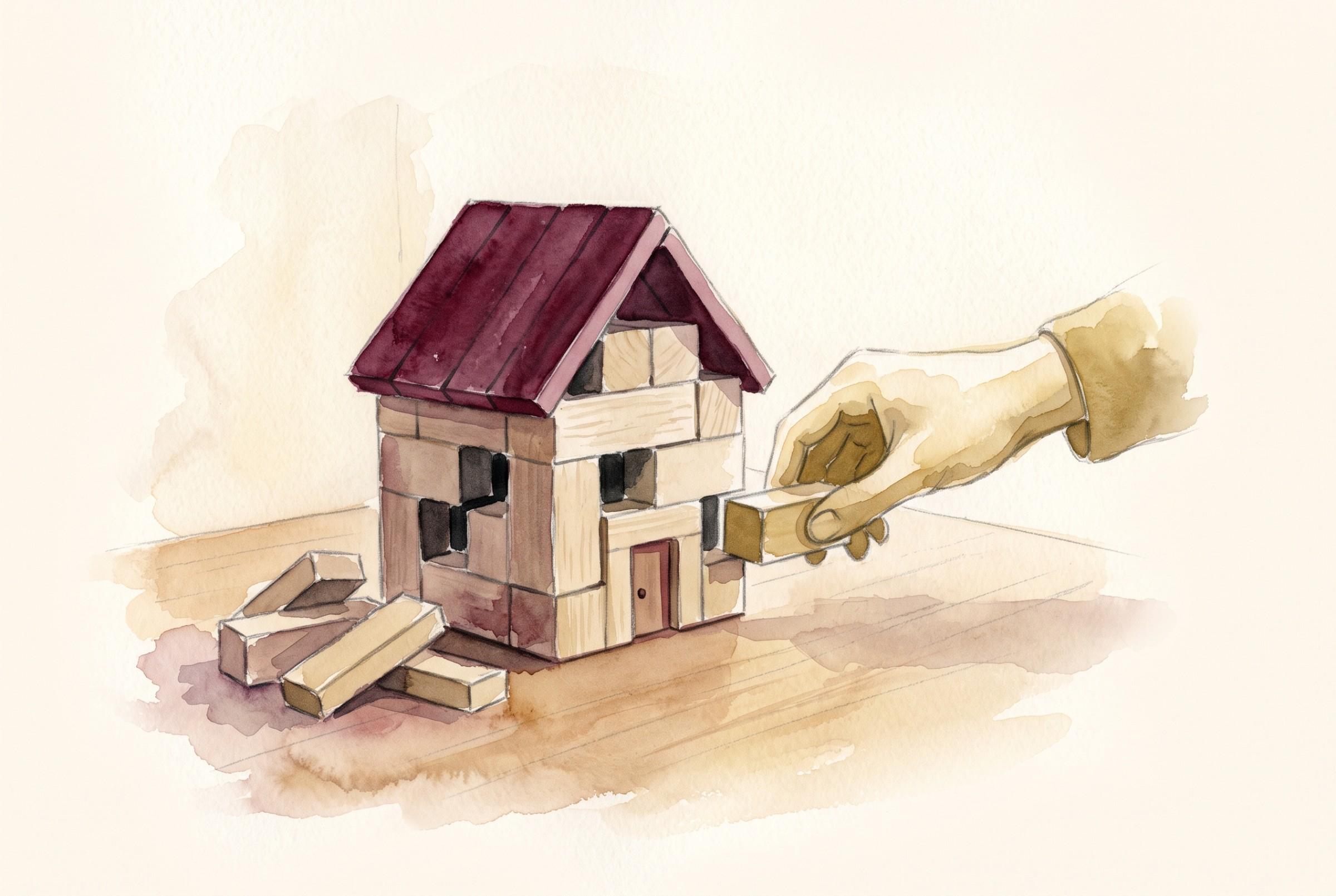
Building Property Equity: Why Equity Is Wealth, Not Cash
When the same property that builds wealth can also become a financial trap.

What lenders see, what borrowing really costs, and how to use credit without it using you
Credit is a reputation system built from records — use it well and it opens doors; use it carelessly and small purchases become long debts.
The next question

An illustrative scenario for education, not personal financial, tax, legal or investment advice. Your situation will differ. About these scenarios