
Dear Junah · Scenario
My parents' college money was a loan all along. Now Dad wants $114,000 back.
Voices in the video are AI-generated.
Read what the video says
Dear Junah,
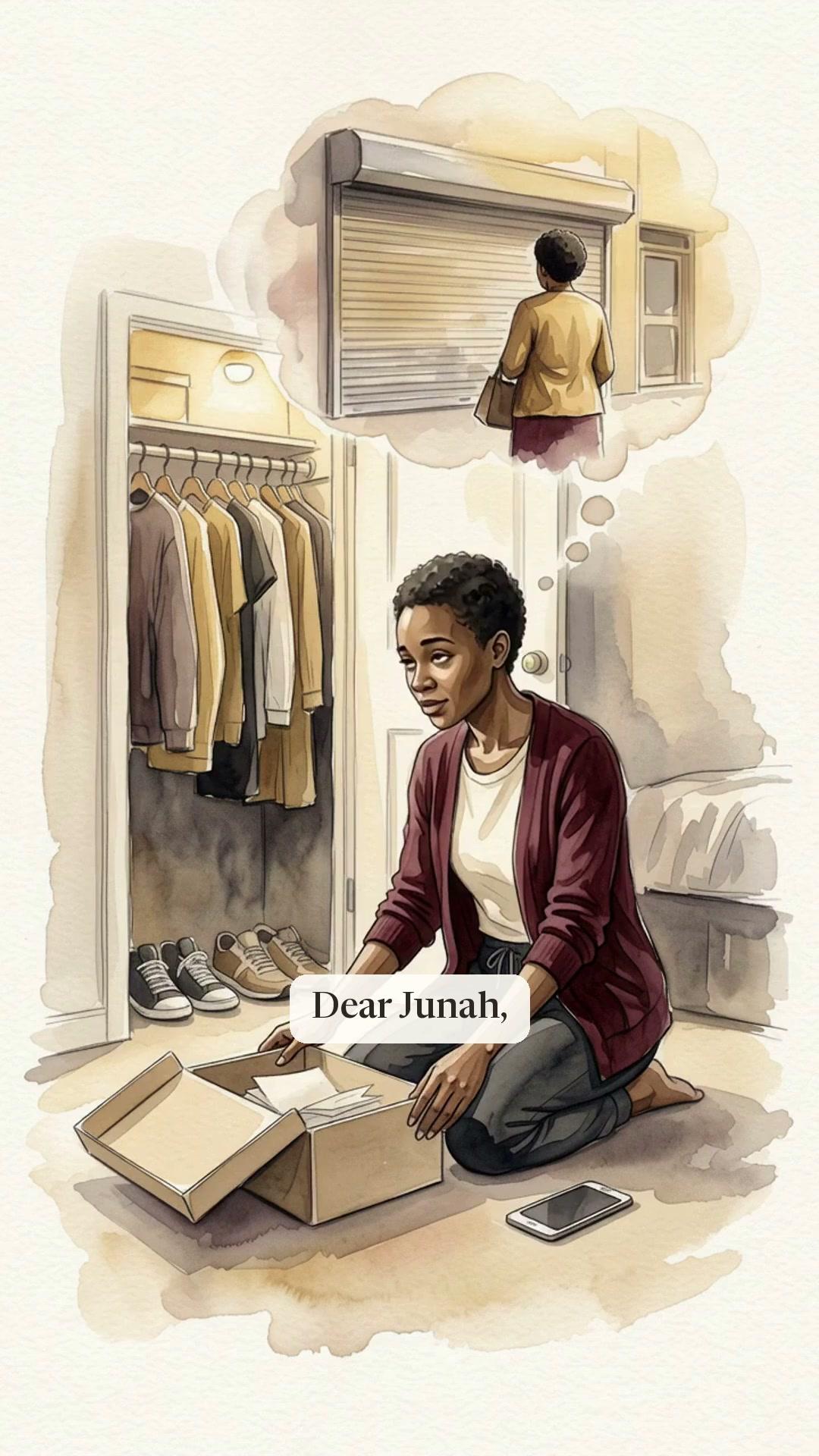
My parents paid for college from a 529. I thought it was a gift. Now Dad, a lawyer, produced a note I signed at 17 and wants $114,000 back. Do I owe it?
Suddenly in debt in Evanston
My dear, a signed note can matter, and so can your age when you signed it. Read it with your own lawyer before you agree or refuse. Then talk with your father.
Warm wishes, Junah
The short answer
Not necessarily. A contract signed at 17 can often be cancelled by the person who signed it, unless they later confirmed it as an adult, for example by making payments. Money put into a 529 also counts as a gift to the student for federal gift tax purposes. Have a lawyer of your own read the note before you agree, refuse or pay anything.

By Junah Mpofu
More than 33 years in banking, including mortgage and credit lending, and a real estate portfolio of her own
Last reviewed
The question
Dear Junah,
My parents paid for college from a 529. I thought it was a gift. Now Dad, a lawyer, produced a note I signed at 17 and wants $114,000 back. Do I owe it?
Suddenly in debt in Evanston
An illustrative letter.
The answer
My dear, I can only imagine how that felt. You walked across a stage believing your parents had given you a start in life, and years later that start arrives with a price and a signature, your own, from a time when the law still saw you as a child. Before we talk about the paper, let me say this: your hurt makes sense. Whatever the note says, you are allowed to feel blindsided.
Can a contract I signed at 17 be enforced?
Not always. In Illinois the age of majority is 18, and contracts signed by a minor are generally voidable. That means the person who signed as a minor can choose to cancel the contract, and the other side usually cannot hold them to it. Courts make exceptions for what the law calls necessaries, such as food and housing, and how a state treats education is one of the questions a lawyer can answer for you.
There is a catch. A contract made as a minor can be confirmed, the legal word is ratified, once you are an adult. Making payments, signing a new version or promising in writing to repay can all count as confirming it. Some states also expect a person to cancel within a reasonable time after turning 18. How those rules apply years later depends on Illinois law and on the exact words of the note. That is why the first step is a lawyer who works for you, not for your father.
Why does it matter that the money came from a 529?
A 529 plan is a college savings account owned by the parent, with the student named as the beneficiary. For federal gift tax purposes, money put into a 529 is treated as a gift to that student. That does not settle the family question on its own, because a parent can still make a separate agreement about money. But it is a fact your lawyer will want, along with a few others:
- Who owned the 529, and whether your parents ever filed a gift tax return for what they put in.
- The note itself: its date, the amount, any interest, when payments were due, and whether your mother signed it too.
- Anything written since, such as texts, cards or emails in which anyone called the money a gift or a loan.
- Any payment you have ever made toward it, even a small one.
What should I avoid until a lawyer has read it?
Please do not sign anything new, make a payment, or send a message promising to repay, even a kind one meant to keep the peace. Each of those could be read as confirming the note. You do not need to refuse anything yet either. A warm reply buys time: "Dad, this surprised me, and I want to understand it properly. I'm going to have someone look at it with me, and then I'd like us to talk."
Many lawyers offer a first consultation for a modest fee, and your county or state bar association runs a referral service that can suggest someone who handles contract disputes.
Will this show up on my credit?
A private note to a parent does not appear on your credit report the way a bank loan does, and it will not lower your score while you sort this out. The only route to real consequences is a lawsuit. If your father ever filed one and won, a court judgment could be collected in ways that touch your pay or your bank account. That is one more reason to answer any court papers on time, with your lawyer beside you.
How do I talk to my father about this?
Once you know where you stand, ask for a conversation, not a negotiation. Lawyers are trained to win arguments, and your father may be treating this as a case. You are his daughter. Ask him what he hopes will happen. Is there a money worry behind this, such as retirement savings that feel too thin? Is it a lesson about responsibility he meant to teach years ago? Or is something else going on between you? The answer changes everything. A father who is frightened about money needs a different conversation from one who wants to be proven right.
If your mother was part of the decision to use the 529, bring her in too. A note one parent drew up may not reflect what both parents intended.
What if I decide to repay some of it anyway?
After the lawyer and the talk, you may decide you want to give something back, out of fairness or out of love. That is your choice to make, freely, in writing, on terms you can live with. A few ways families handle it:
- A smaller, agreed amount, written as a new agreement your lawyer has read, which replaces the old note entirely.
- Payments that fit your budget, with no interest, over a fixed number of years.
- Forgiveness over time. In 2026 each parent can give up to $19,000 a year to any one person without filing a gift tax return, so two parents could forgive $114,000 within three years. Their tax preparer can explain how that works for them.
Whatever you choose, keep your own foundation standing. Keep your emergency savings and your retirement contributions going. A debt to family paid at the cost of your own future helps no one, least of all parents who wanted you to have a good start.
My dear, you are not a bad daughter for asking questions, and he is not a villain for keeping a piece of paper. Get your facts first, then go to him with an open hand. Money can be settled in many ways. A father and his daughter deserve more care than any note.
Before you answer the note
Copy the note
Photograph every page, with dates and signatures, and keep the copy somewhere safe.
Write down the dates
When you signed, when you turned 18, and when the 529 money was paid out.
Collect every message about the money
Texts, cards or emails in which anyone called it a gift or a loan.
Make no payments or promises yet
A payment or a written promise to pay could count as confirming the note.
See a lawyer who works for you
A county or state bar referral service can suggest a contract lawyer near Evanston.
Ask your father what he needs
A money worry and a point of principle call for different answers.
Put any new deal in writing
If you choose to repay something, a new written agreement can replace the old note.
Questions people ask
Can my parents make me pay back the money they spent on my college?
Only if there is an agreement a court would enforce. Money spent with no written loan terms is usually hard to call a debt later. A note signed as an adult may be binding. A note signed before 18 is generally voidable by the person who signed it, unless they confirmed it as an adult, for example by making payments. Rules vary by state, so a lawyer should read the actual document.
Is a contract signed at 17 legally binding?
Generally it is voidable, which means the person who signed it as a minor can choose to cancel it. Exceptions exist for necessaries such as food and housing. After turning 18, making payments, signing a new agreement or promising in writing to pay can count as ratifying the contract, and some states expect a minor to cancel within a reasonable time after reaching adulthood.
Is money from a 529 plan a gift or a loan?
For federal gift tax purposes, a contribution to a 529 plan is treated as a completed gift to the student named as beneficiary. Parents can still make a separate agreement asking to be repaid, so the tax treatment does not settle a family dispute on its own, but it is relevant evidence. A lawyer can tell you how it applies to you.
How much of a family loan can parents forgive each year without a gift tax return?
In 2026 the annual gift tax exclusion is $19,000 per giver per recipient, so two parents can forgive up to $38,000 a year of a child's loan without filing a gift tax return. Forgiving more than that requires a return, but tax is rarely owed because of the lifetime exemption, which is $15 million per person in 2026.
Three things to take away
- A note signed at 17 may be cancellable, but payments or promises made as an adult can confirm it.
- Pay nothing and sign nothing until a lawyer of your own has read the note.
- Ask your father what he truly needs before anyone talks numbers.
One thing to do this week
Gather the note, every message about the money and any payment records, then book a first consultation with a contract lawyer.
Keep going

Debt Management Builds Future Freedom
How you manage debt determines whether borrowing supports your future or limits it — and why debt management builds future freedom.

Know Your Financial Reality
Before you can improve your finances, you must first understand what is happening with your money today.

What lenders see, what borrowing really costs, and how to use credit without it using you
Credit is a reputation system built from records — use it well and it opens doors; use it carelessly and small purchases become long debts.
An illustrative scenario for education, not personal financial, tax, legal or investment advice. Your situation will differ. About these scenarios