
Dear Junah · Scenario
I'm 74 on Social Security with $22,000 on my cards. Where do I start?
Voices in the video are AI-generated.
Read what the video says
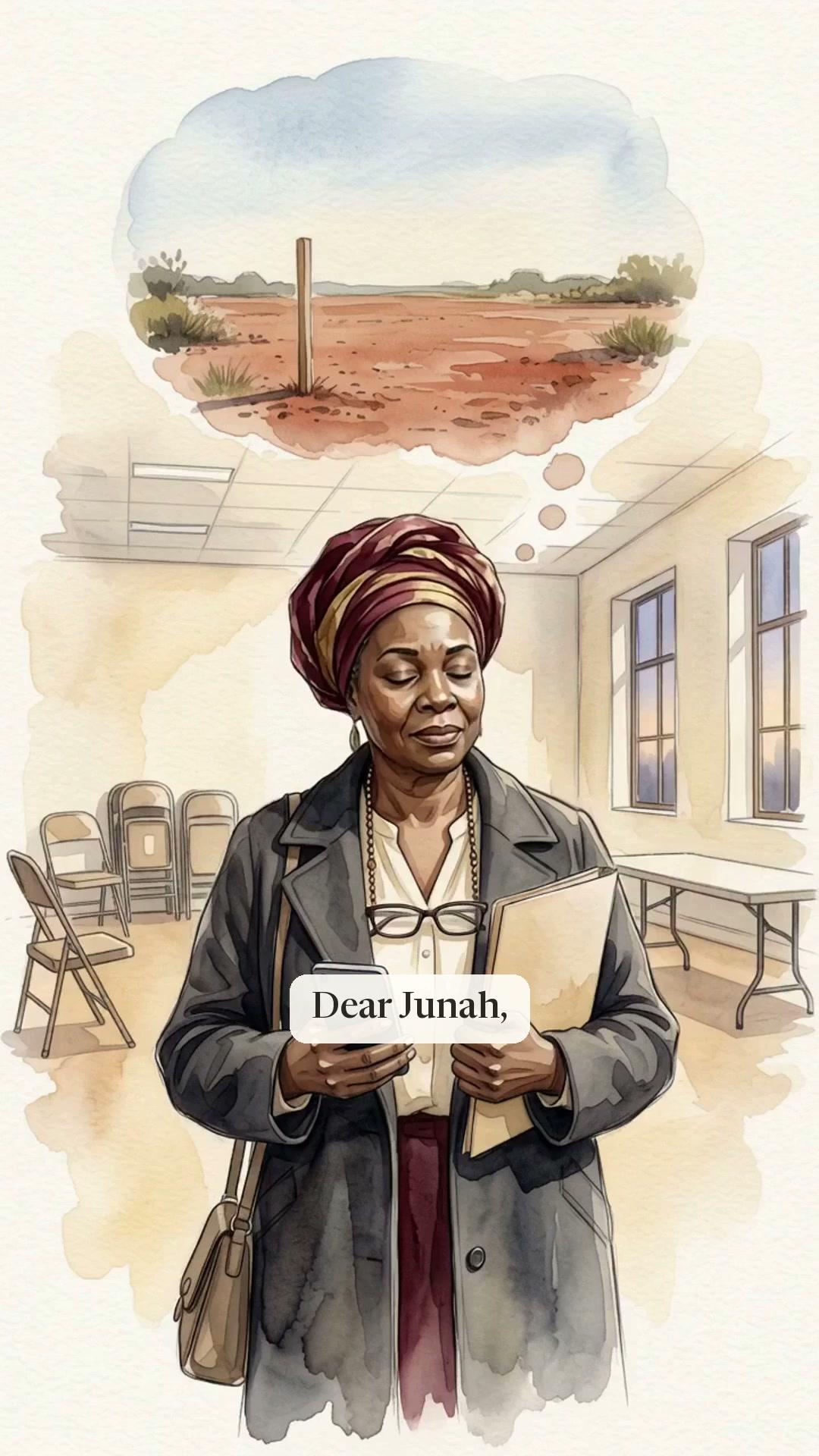
Dear Junah,
I'm 74, living on Social Security. A $3,000 car repair and dental work went on my cards. Now I owe $22,000, and the interest alone is over $300 a month. Where do I start?
Maxed out in Biloxi
My dear, call each card company and ask about hardship rates. A nonprofit credit counselor can help too, and check which benefits you may qualify for. Stop adding to the cards.
Warm wishes, Junah
The short answer
Start by protecting your income, then cut the interest. Your Social Security is protected from card companies' garnishment when it is directly deposited. Ask each card for a hardship rate, see a nonprofit credit counselor about a repayment plan, check for benefits that ease other bills, and pay with cash or debit while the balances come down.

By Junah Mpofu
More than 33 years in banking, including mortgage and credit lending, and a real estate portfolio of her own
Last reviewed
The question
Dear Junah,
I'm 74, living on Social Security. A $3,000 car repair and dental work went on my cards. Now I owe $22,000, and the interest alone is over $300 a month. Where do I start?
Maxed out in Biloxi
An illustrative letter.
The answer
My dear, thank you for writing, and please set down the embarrassment. A car that breaks and teeth that need care are not extravagances. They are life, and at 74 life still sends bills. You have not failed. You have a problem with a solution, and we will find it step by step.
Is my Social Security safe from the card companies?
Let me answer the fear first, because it may be keeping you up at night. Social Security benefits are protected from garnishment by credit card companies and other private creditors. If a card company ever won a court judgment against you, your bank would have to protect two months' worth of benefits that were directly deposited into your account. That protection works best with direct deposit, so if you still receive a paper check, consider switching.
That does not mean the debt disappears. The interest still grows, and late payments still hurt your credit. But no one can take the money you need for food and rent from your benefit check. Pay for your essentials first, always.
Where do I start?
With the interest, because that is what keeps the balance from shrinking. You are paying over $300 a month just to stand still. A few steps can change that:
- Phone every card issuer and request its hardship program. Explain that you are retired on a fixed income and that medical and car costs created the balance. Many companies will lower the rate, waive fees or set a fixed payment for a time. Ask for any agreement in writing.
- See a nonprofit credit counseling agency. A counselor can look at your whole budget, and may offer a debt management plan that often lowers rates and rolls the cards into one monthly payment. Choose a nonprofit agency, and be wary of any company that wants fees before it settles anything.
- Stop adding new charges. Put the cards somewhere hard to reach and pay for everyday things with cash or debit while you work the balances down.
How long would it take to pay off?
The planner below works through $22,000 on two cards at rates that produce about $337 a month in interest, close to what you describe. Paying $710 a month, with the extra going to the higher rate first, clears them in about 43 months, with about $8,050 in interest.
Lower rates change the picture dramatically. As an example, if a hardship program or counseling plan brought both cards down to 9 percent, paying just $660 a month would clear them in about 39 months, with roughly $3,400 in interest. Every point you take off the rate is money back in your pocket.
Could other benefits ease the pressure?
Quite possibly, and many people your age miss out on help they qualify for. Freeing up money elsewhere leaves more for the cards. Programs worth checking include:
- Medicare Savings Programs, which can pay your Part B premium and other costs if your income and savings are limited.
- Extra Help with prescription drugs, which caps what you pay for each medicine.
- SNAP food benefits and help with heating and cooling bills.
- Property tax relief for older homeowners, if you own your home.
The National Council on Aging's free BenefitsCheckUp website can show which ones you may qualify for, and your local Area Agency on Aging can help you apply.
What about the next car repair or dental bill?
This is how many retirees end up back on the cards. Once the balances are falling, try to set aside even a small amount each month, $25 or $50, in a separate savings account for repairs and dental care. Some dental schools and community health centers offer lower-cost care, and many dentists will set up payment plans without interest if you ask before treatment. And before any large repair, a second quote often pays for itself many times over.
Should I consider anything more drastic?
Some people in your situation, with little income beyond Social Security and few assets, are told about bankruptcy or about simply stopping payments, since their income is protected. Those are serious decisions with real consequences for your credit and peace of mind, and they are not first steps. If the hardship rates and a counseling plan are not enough, a nonprofit counselor or a legal aid office in Mississippi can explain all your options honestly. Be wary of anyone who calls you promising to make debt vanish for a fee.
My dear, $22,000 feels like a mountain, but you climb it the same way as any other: one step, then the next. Protect your income, lower the interest, stop the new charges, and let the balances fall. You will be surprised how much lighter you feel the first month the numbers go down instead of up.
The numbers
The letter’s debts, worked out by the Debt Payoff Planner: Card 1, $13,000 at 17.99% with a $390 minimum; Card 2, $9,000 at 18.99% with a $270 minimum.
- 3 years 7 months
- Paying $710 a month, highest rate first.
- $8,049
- Everything the cards charge before the last one is paid off.
- $994
- Against paying the same minimums with nothing extra, and 5 months sooner.
- $710
- Every minimum, plus $50 extra.
| Plan | Debt-free in | Interest |
|---|---|---|
| Minimums only, nothing extra | 4 years | $9,043 |
| Avalanche: highest rate first | 3 years 7 months | $8,049 |
| Snowball: smallest balance first | 3 years 7 months | $8,049 |
Questions people ask
Can credit card companies take my Social Security?
Generally no. Social Security benefits are protected from garnishment by private creditors such as credit card companies. If a creditor obtains a court order, a bank must protect two months of benefits that were directly deposited into the account. Benefits received by paper check and then deposited may not get that automatic protection.
How can I pay off credit card debt on a fixed income?
Common first steps are asking each card issuer for a hardship program with a lower rate or fixed payment, contacting a nonprofit credit counseling agency about a debt management plan, stopping new charges, paying the highest-rate card first, and checking for benefits such as Medicare Savings Programs or Extra Help that free up money.
What is a credit card hardship program?
Many card issuers offer temporary hardship programs for customers facing financial difficulty, such as reduced interest rates, waived fees or a fixed payment for a set time. Terms vary by issuer. Calling and explaining your situation is usually how to ask, and getting the agreement in writing is wise.
Are debt management plans worth it for seniors?
They can be. A nonprofit credit counseling agency can set up a debt management plan that often lowers interest rates and combines card payments into one monthly payment, usually over three to five years. The cards involved are typically closed. Choose a nonprofit agency and avoid companies that charge fees before settling any debt.
Three things to take away
- Directly deposited Social Security is protected from card companies' garnishment.
- Lower the interest first: ask every card for a hardship rate in writing.
- Check for benefits that free up money, and stop new charges while balances fall.
One thing to do this week
Phone every card issuer to request its hardship program, then use BenefitsCheckUp to see what help is open to you.
Keep going

Debt Management Builds Future Freedom
How you manage debt determines whether borrowing supports your future or limits it — and why debt management builds future freedom.

Discover the Wealth You Already Have
Your retirement wealth may be much broader than the balance shown on a bank or investment statement.
Reduce Financial Pressure Before Retirement
Retirement planning is not only about increasing assets. It is also about reducing financial pressure.
The next question
An illustrative scenario for education, not personal financial, tax, legal or investment advice. Your situation will differ. About these scenarios